

Asante Female Fertility Figure Akua'ba
Asante Female Fertility Figure Akua'ba
Couldn't load pickup availability
Asante people, early 20th century, Ghana
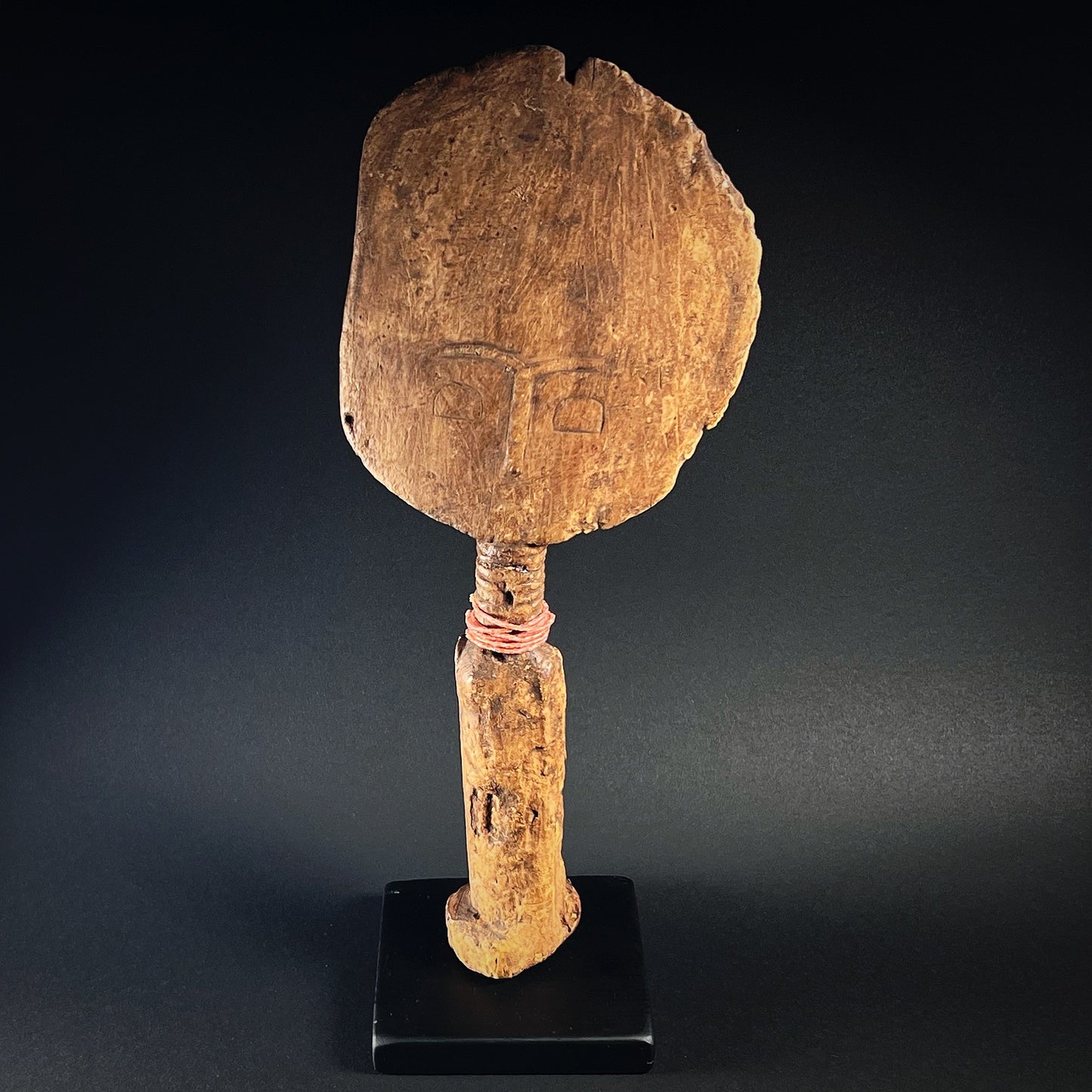
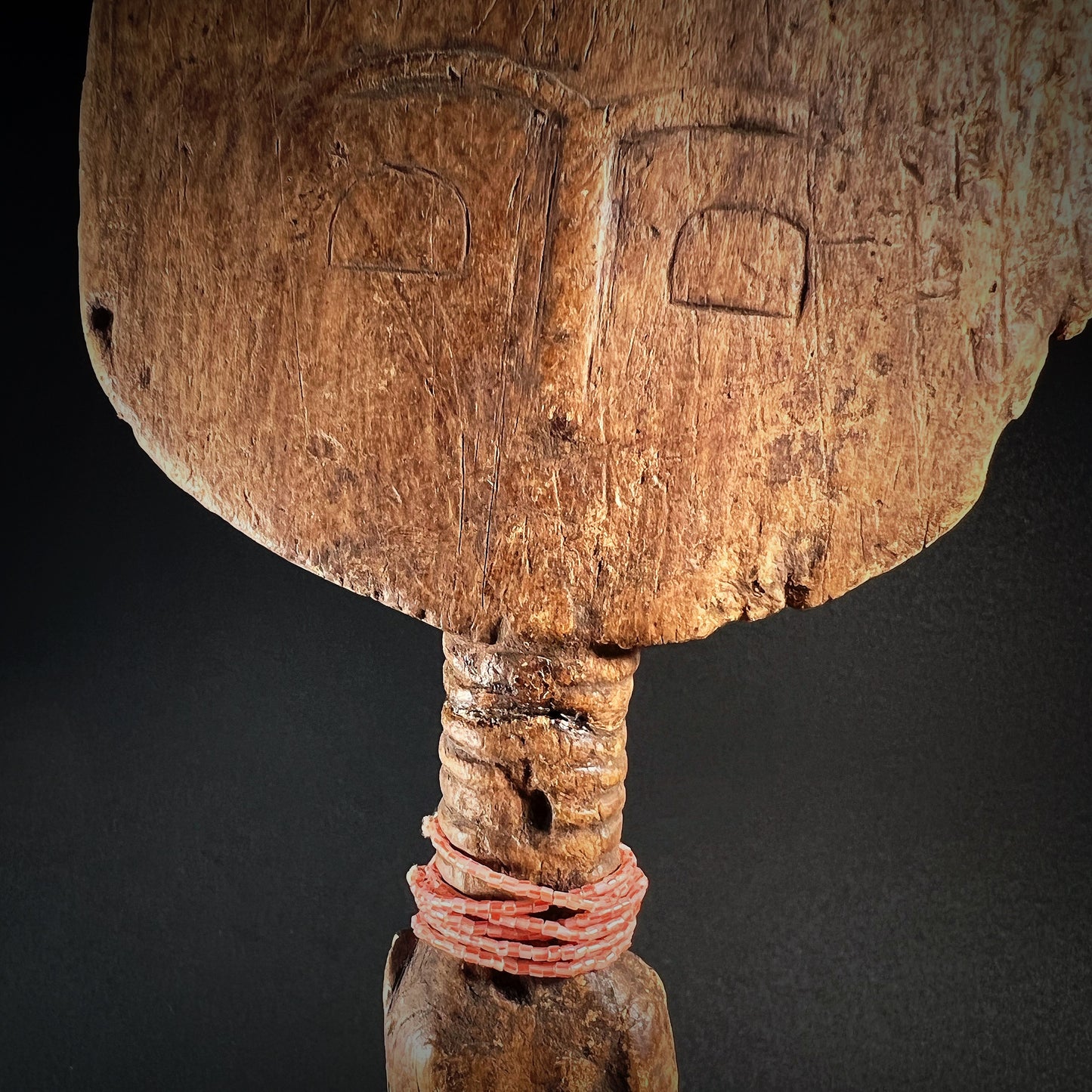
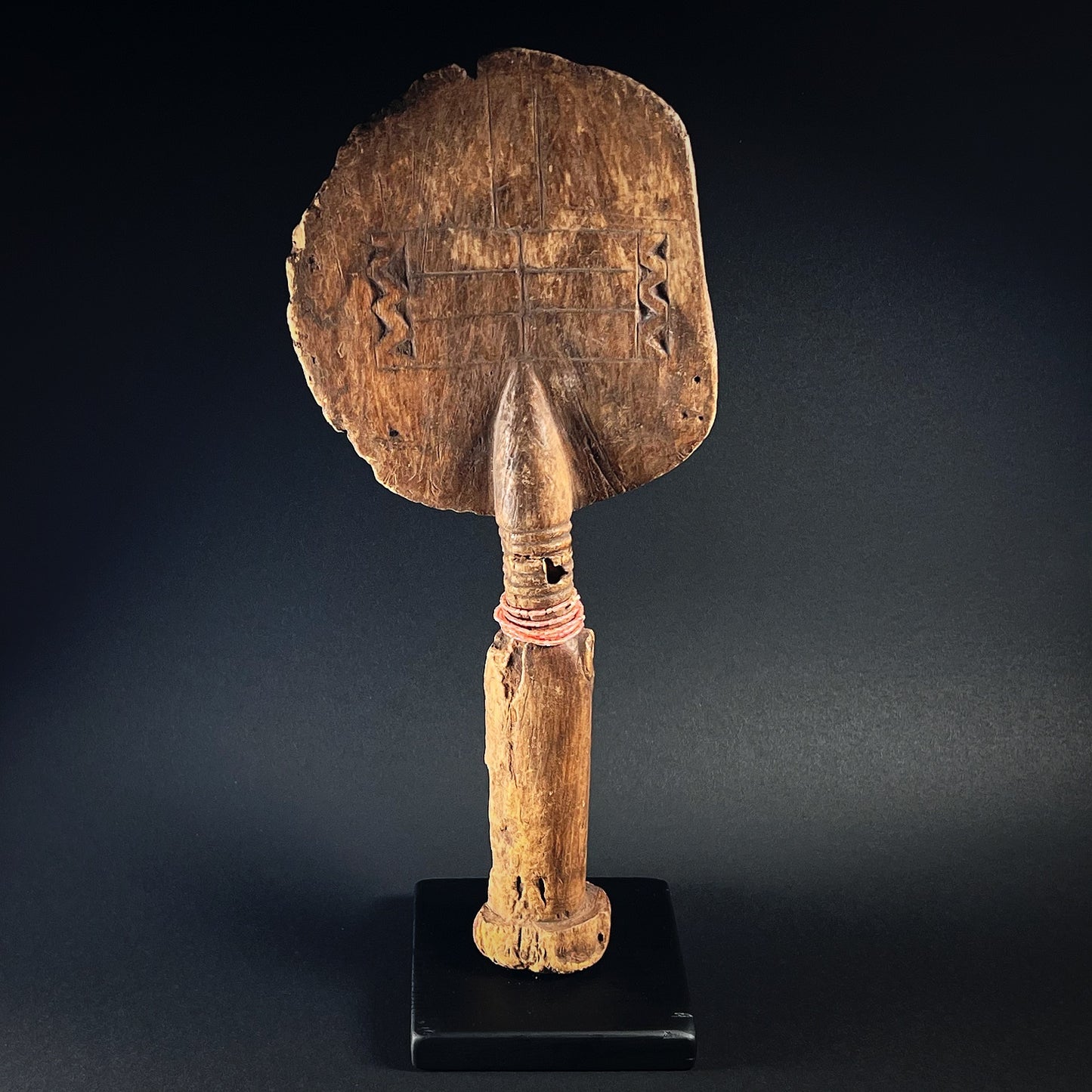
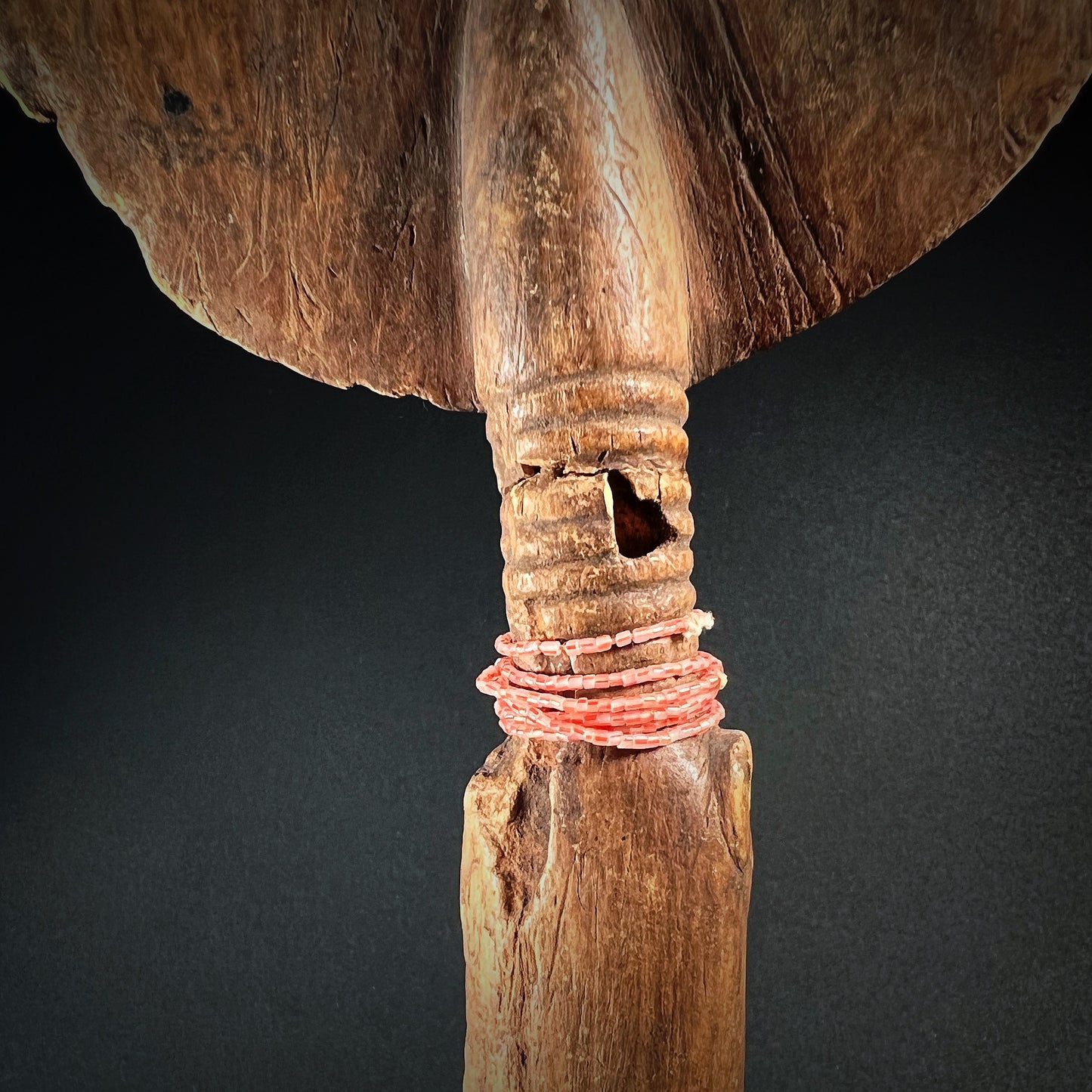
Exceptional early Asante fertility figure, akua’ba (“Akua’s child”), masterfully carved from fine-grained wood and exhibiting a smooth, lustrous patina acquired through years of devotional handling. The figure depicts an idealized, abstract female form—a long cylindrical torso with small horizontal arms, a ringed neck—embellished with a strand of pink glass beads symbolizing beauty and prosperity, and a large, flat, disklike head embodying knowledge and spiritual power.
According to Akan legend, a woman named Akua once sought to overcome her infertility through divine intervention. Guided by a priest, she commissioned a sculptor to carve a wooden surrogate child, which she carried on her back as if it were her own. Through her devotion, she miraculously conceived and gave birth to a healthy daughter. Since then, women desiring children have commissioned and cared for akua’ba figures as vessels of fertility and blessing.
Infused with spiritual potency, akua’ba figures were treated as living beings—washed, dressed, anointed, and adorned with beads—their owners entrusting them with prayers for conception, safe childbirth, and healthy offspring. After fulfilling their purpose, the figures were either passed to other women in the family or offered to shrine priests in gratitude.
The protruding breasts denote youth and fertility, while scarifications on the face reference traditional medicinal practices for protection. Always female, these figures reflect the matrilineal structure of Asante and Fante society, in which women are the bearers of lineage and continuity.
The Asante people (also Ashanti), a major Akan group native to modern-day Ghana, established a powerful kingdom in the 17th century under King Osei Kofi Tutu I. Their traditional religion venerates Nyame, the supreme being, alongside a pantheon of abosom (gods), asuman (spirits), and nsamanfo (ancestral souls). The akua’ba stands as one of the most enduring and elegant symbols of Asante spirituality, femininity, and aesthetic refinement.
Good condition. Wear commensurate with age and use, with worm holes, chips and fractures. Size approx. 29,5cm x 12,0cm x 4,5cm (excluding modern stand).
Provenance: Dutch private collection.
References and further reading:
Akua'ba Asante. Wednesday Child, Ron van Doorn & Herbert M. Cole, Published by Dongen, 2021.
The Asante, M. D. McLeod, Published by British Museum Publications, London, 1981.
Isn't S/He a Doll: Play and Ritual in African Sculpture, Elisabeth Lynn Cameron & Doran H. Ross, UCLA Fowler Museum of Cultural History, 1996.
Religion and art in Ashanti, Robert S. Rattray, 1927, p. 281 fig. 194-195.
-
Shipping
The shipment will be prepared in the course of 3-5 days and dispatched via Posti Group Oyj or purchased item(s) can be picked up from our shop during the store's opening hours (Tarkk’ampujankatu 4, 00140, Helsinki, Finland). Within the Finland, all items are shipped via Posti Group Oyj unless otherwise requested. We pack the items carefully and mainly in recycled materials because we want to save nature. You will receive the tracking number for your items by e-mail.
-
Returns
Returns and exchange will be accepted within fourteen days (14) of receipt at the purchaser’s cost to include freight and packaging. Items must be returned in the same condition as when they were shipped, and will not be accepted if damaged or altered in any way. Please inform us via email (info@gotanmaailma.fi) or by calling +358408408352 before sending. We do not accept returns more than 14 days after delivery.