


Bamana Power Figure (Boli)
Bamana Power Figure (Boli)
Couldn't load pickup availability
Bamana people, early to mid-20th century, Mali, West Africa
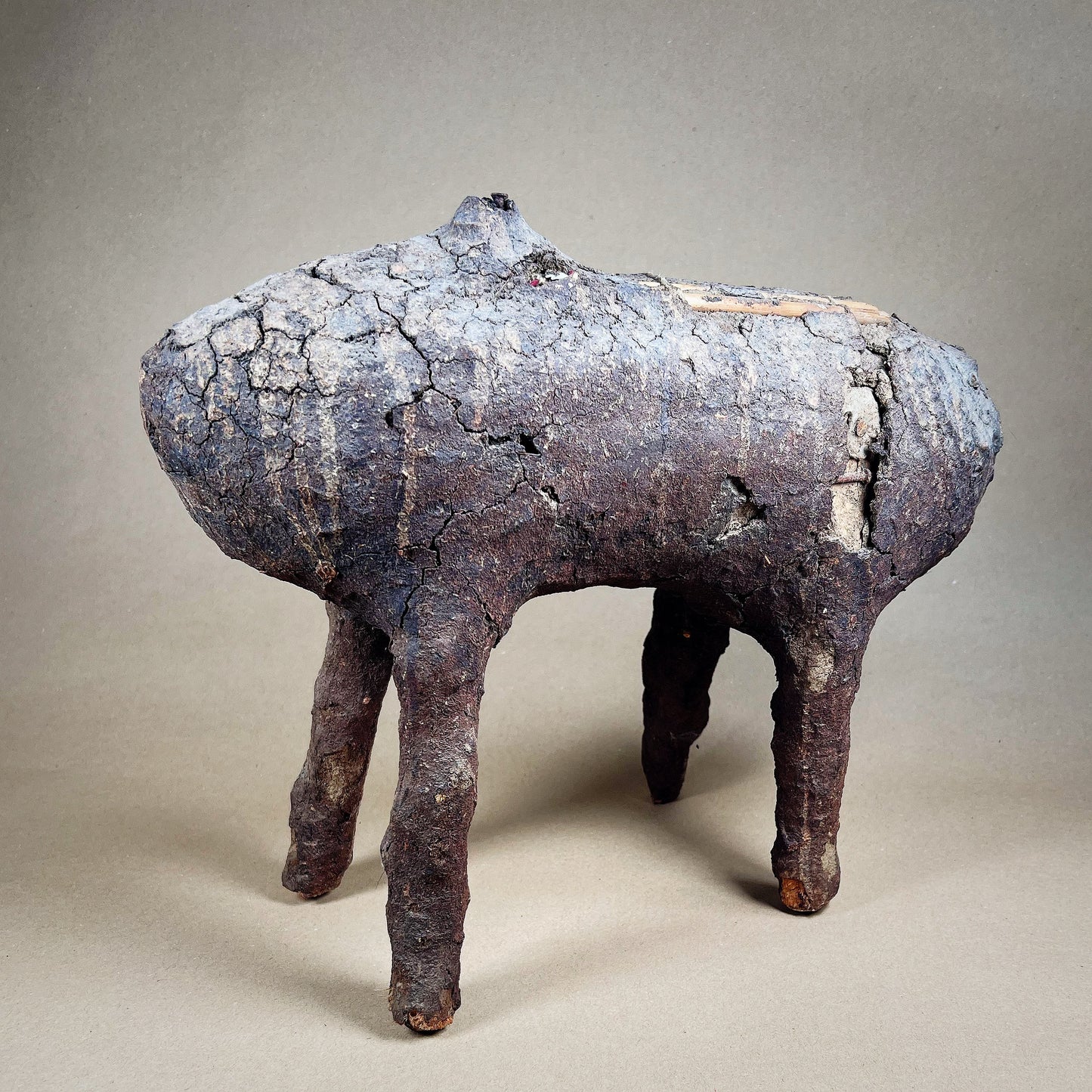
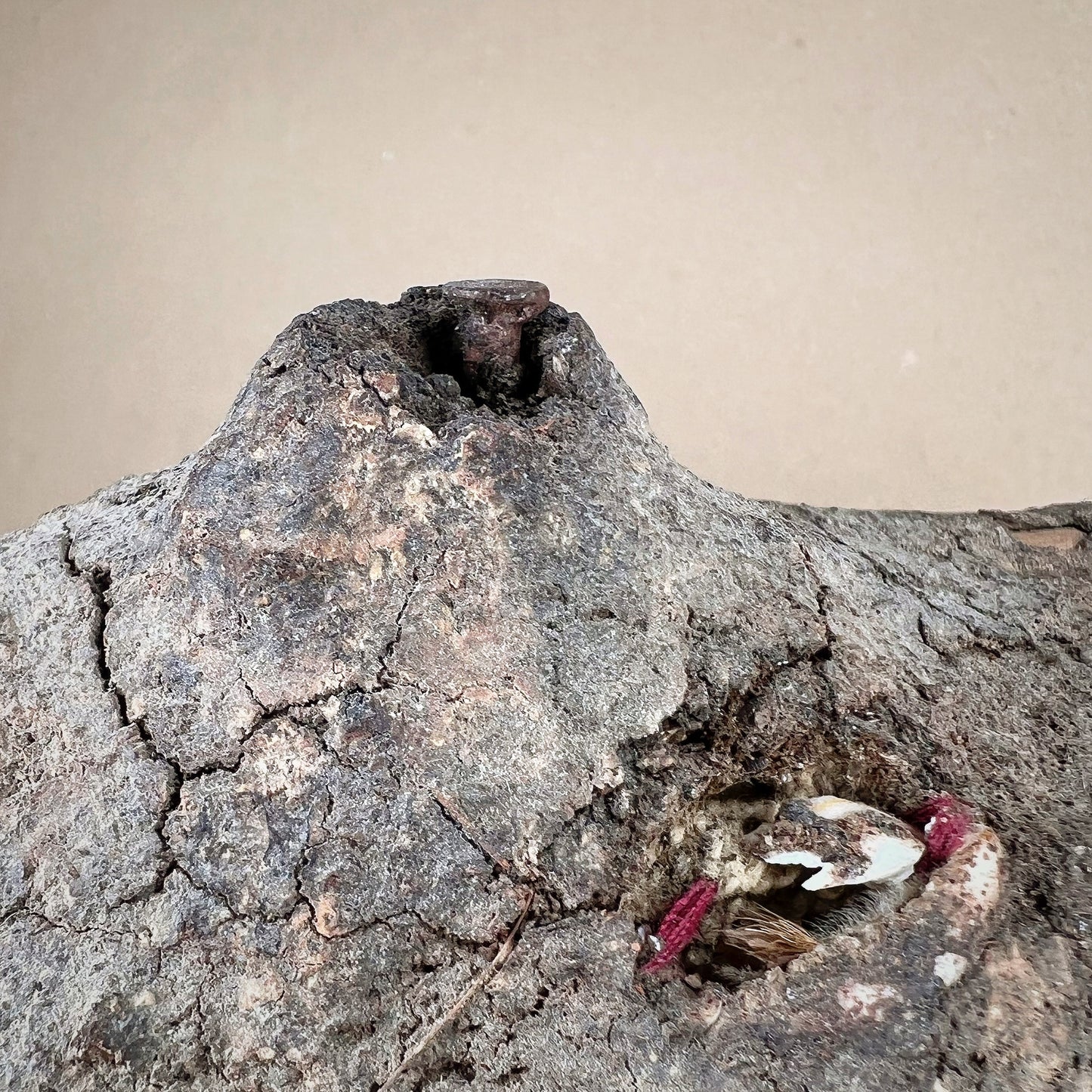
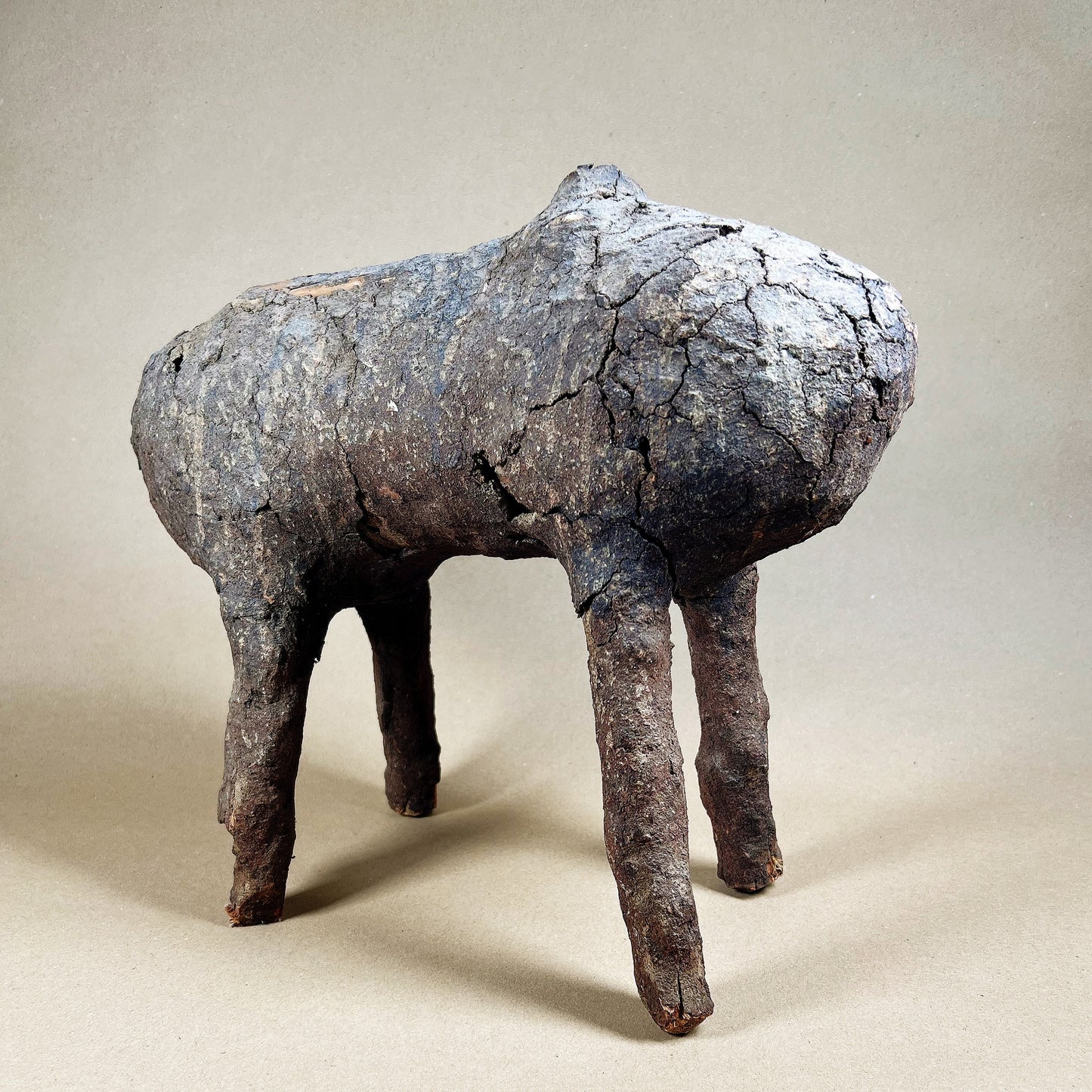
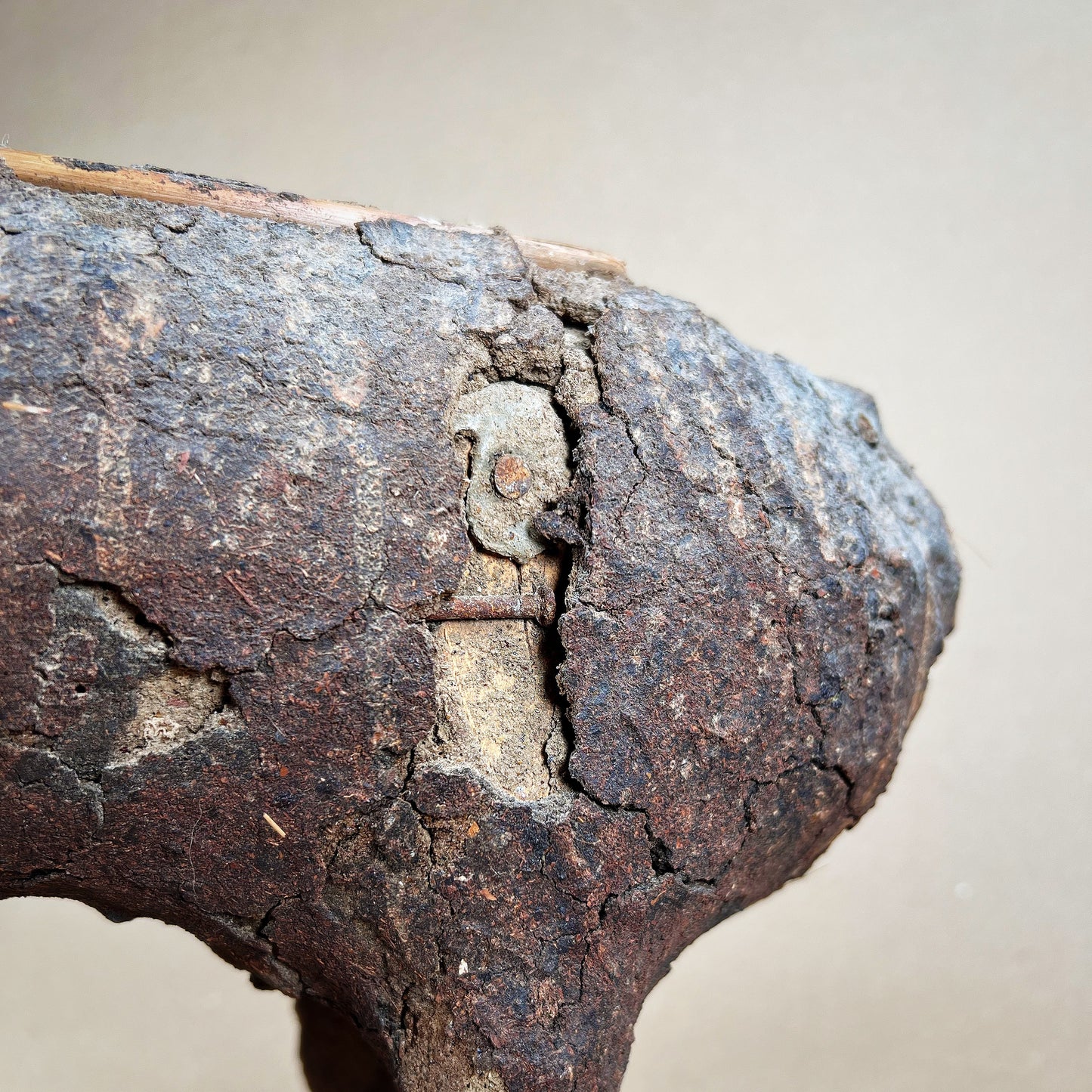
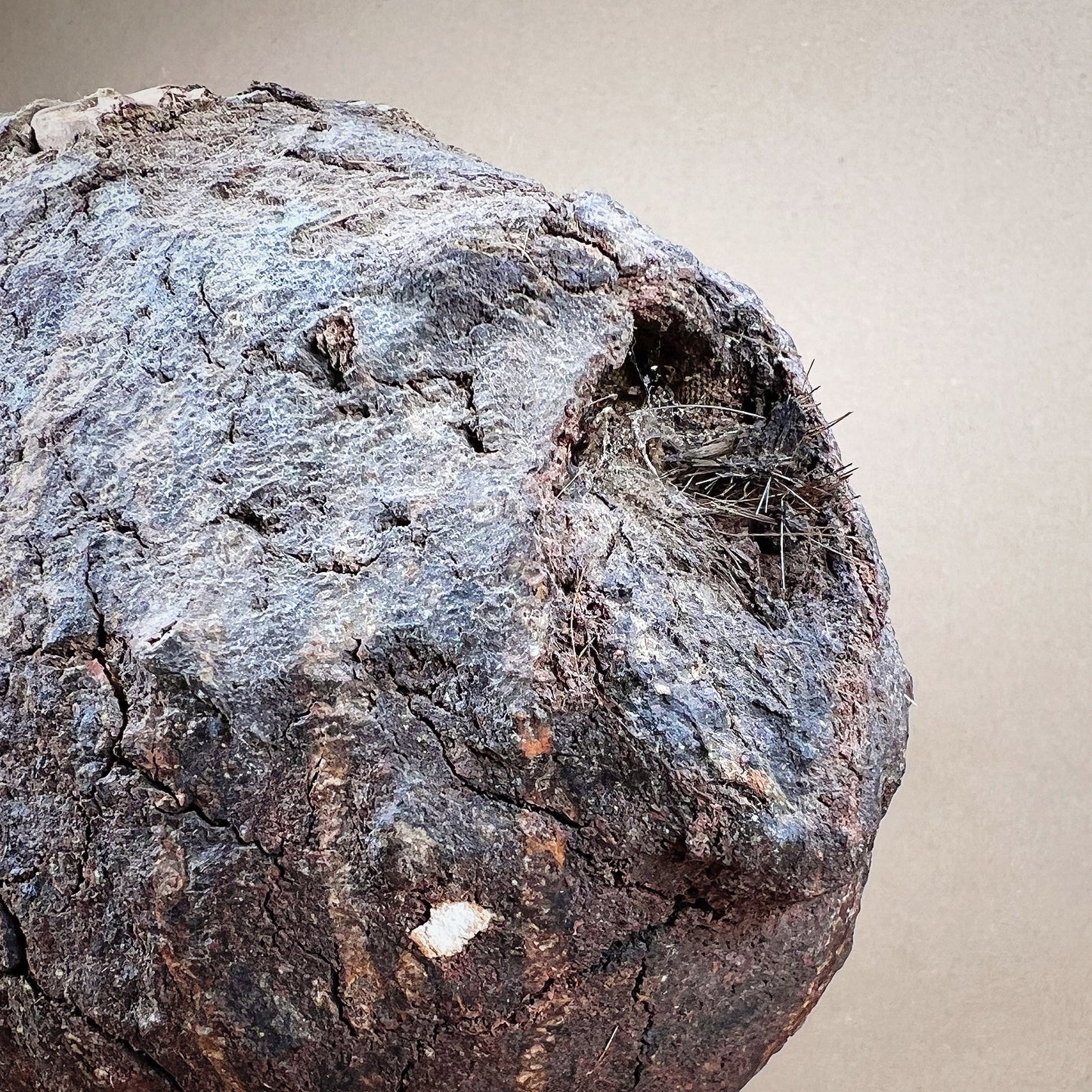
An exceptional aged power figure and ritual object, known as a boli, composed around a wooden or bamboo core and overmodeled with layers of powerful organic and symbolic substances — mud, iron nails, cowrie shells, eggs, bird beaks, white cloth, ritual plants, bark, venom, chewed kola nuts, menstrual blood, urine, honey, beer, animal and human placentas, and excrement. Over time, sacrificial offerings of blood, millet porridge, and fermented beverages have accumulated on its surface, forming a dense, crusted patina that embodies generations of ritual activity. Each layer of accretion enhances the boli’s spiritual potency and its capacity to mediate between the human and supernatural realms.
The Bamana people (also Bambara or Banmana), a Mandé-speaking group of the upper Niger region of Mali and neighboring countries, created such figures as vital instruments of religious and judicial power. Among their most compelling ritual forms are the boliw (sing. boli), sacred objects that act as reservoirs and regulators of nyámà — the vital life force that animates all beings and matter.
Boliw may assume abstract anthropomorphic or zoomorphic forms, recalling the shapes of cows, hippopotamuses, or humans. They vary in scale from handheld objects to monumental forms and are used at multiple levels — village, family, or individual — each constructed according to secret formulas and consecrated through complex rites. The most powerful examples belong to male initiation societies such as Komo and Kono, whose members alone possess the knowledge to create, activate, and handle them safely.
The function of the boli is to concentrate and control the dangerous force of nyámà for the well-being and protection of the community. This invisible energy pervades the universe, manifesting intensely in anomalous natural phenomena, potent substances, and transitional states — a red and white kola nut, menstrual blood, or the body of a woman who dies in childbirth. Through repeated anointing with sacrificial matter, the boli becomes a living repository of this raw spiritual energy.
For the Bamana, boliw are conceived as “wet” entities, perpetually renewed with sacrificial blood to maintain their efficacy. They function as magical judges and mediators, invoked to hear disputes, reveal truth, and punish transgression. The use of excrement and other taboo substances in their making reinforces their fearsome authority — boliw embody both purification and poison.
As art historian Sarah Brett-Smith has noted:
“It is possible that each boli incorporates fecal matter from every adult member of the association that commissions it, forcing each man to confront his own excrement every time he swears an oath. … Boliw are constructed from excrement, and excrement is poison. Boliw are therefore poisonous.”
The boli thus stands as a tangible nexus of Bamana cosmology, uniting life and death, purity and corruption, material and spiritual. To the uninitiated, it may appear inert and opaque; to those who know, it is alive with sacred power.
Good condition. Wear commensurate with age and use. Cracks and fractures due several libations over many years. Size approx. 30,0cm x 34,0cm x 11,0cm.
Provenance: Dutch private collection
References and further reading:
The Poisonous Child, Sarah C. Brett-Smith, The University of Chicago Press on behalf of the Peabody Museum of Archaeology and Ethnology, Anthropology and Aesthetics No.6, Autumn 1983, pp. 47-64.
Humans and Things: Mande "Fetishes" as Subjects, Agnes Kedzierska Manzon, The George Washington University Institute for Ethnographic Research, Anthropological Quarterly, Vol.86, No.4, Fall 2013, pp. 1119-1151.
When is an Object Finished? The Creation of the Invisible among the Bamana of Mali, Sarah C. Brett-Smith, The University of Chicago Press on behalf of the Peabody Museum of Archaeology and Ethnology, Anthropology and Aesthetics No. 39, Spring 2001, pp. 102-136.
-
Shipping
The shipment will be prepared in the course of 3-5 days and dispatched via Posti Group Oyj or purchased item(s) can be picked up from our shop during the store's opening hours (Tarkk’ampujankatu 4, 00140, Helsinki, Finland). Within the Finland, all items are shipped via Posti Group Oyj unless otherwise requested. We pack the items carefully and mainly in recycled materials because we want to save nature. You will receive the tracking number for your items by e-mail.
-
Returns
Returns and exchange will be accepted within fourteen days (14) of receipt at the purchaser’s cost to include freight and packaging. Items must be returned in the same condition as when they were shipped, and will not be accepted if damaged or altered in any way. Please inform us via email (info@gotanmaailma.fi) or by calling +358408408352 before sending. We do not accept returns more than 14 days after delivery.