

Dani Plaited Bracelet (Sekan)
Dani Plaited Bracelet (Sekan)
Couldn't load pickup availability
Dani people, mid-20th century, Baliem Valley, Irian Jaya (Papua), Indonesia
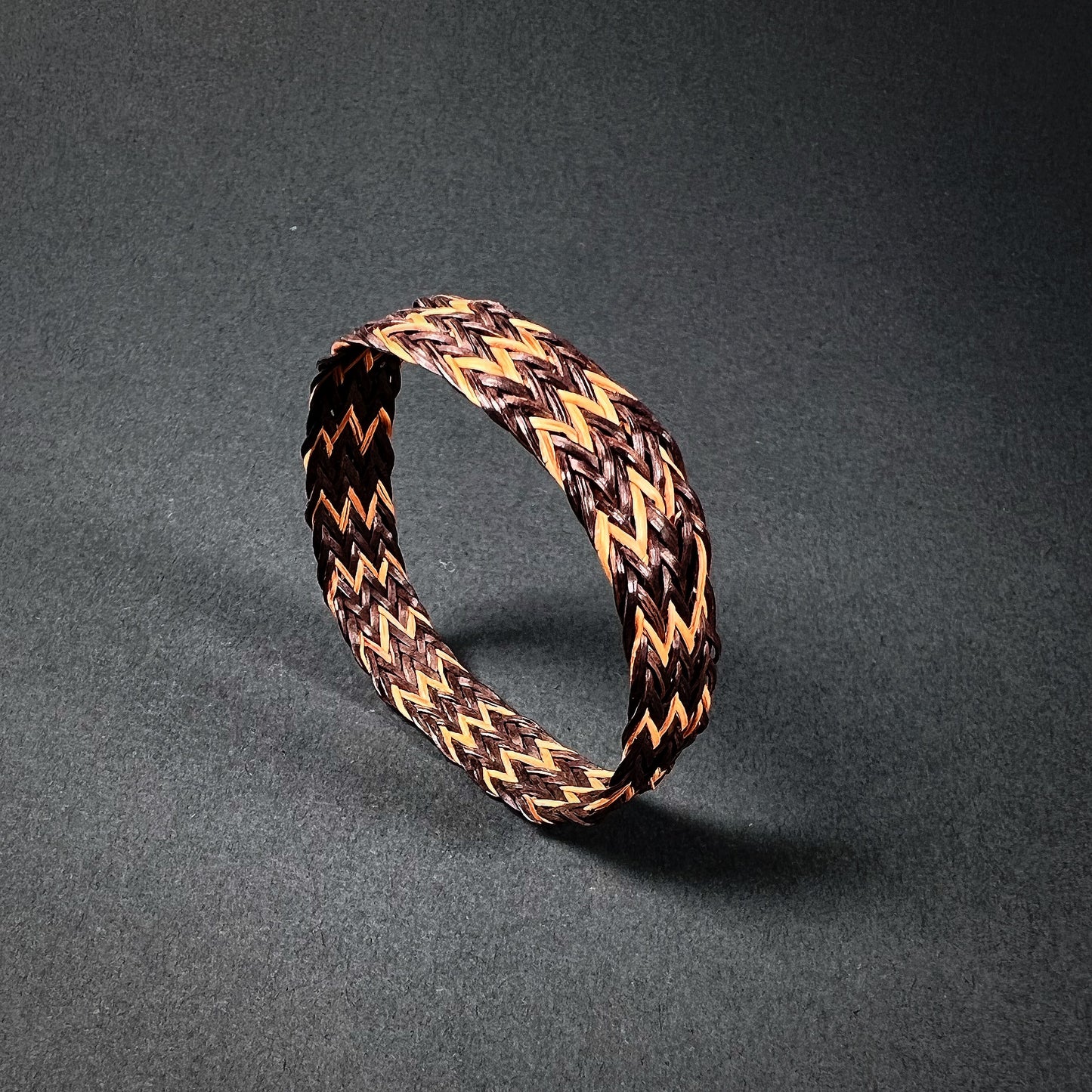
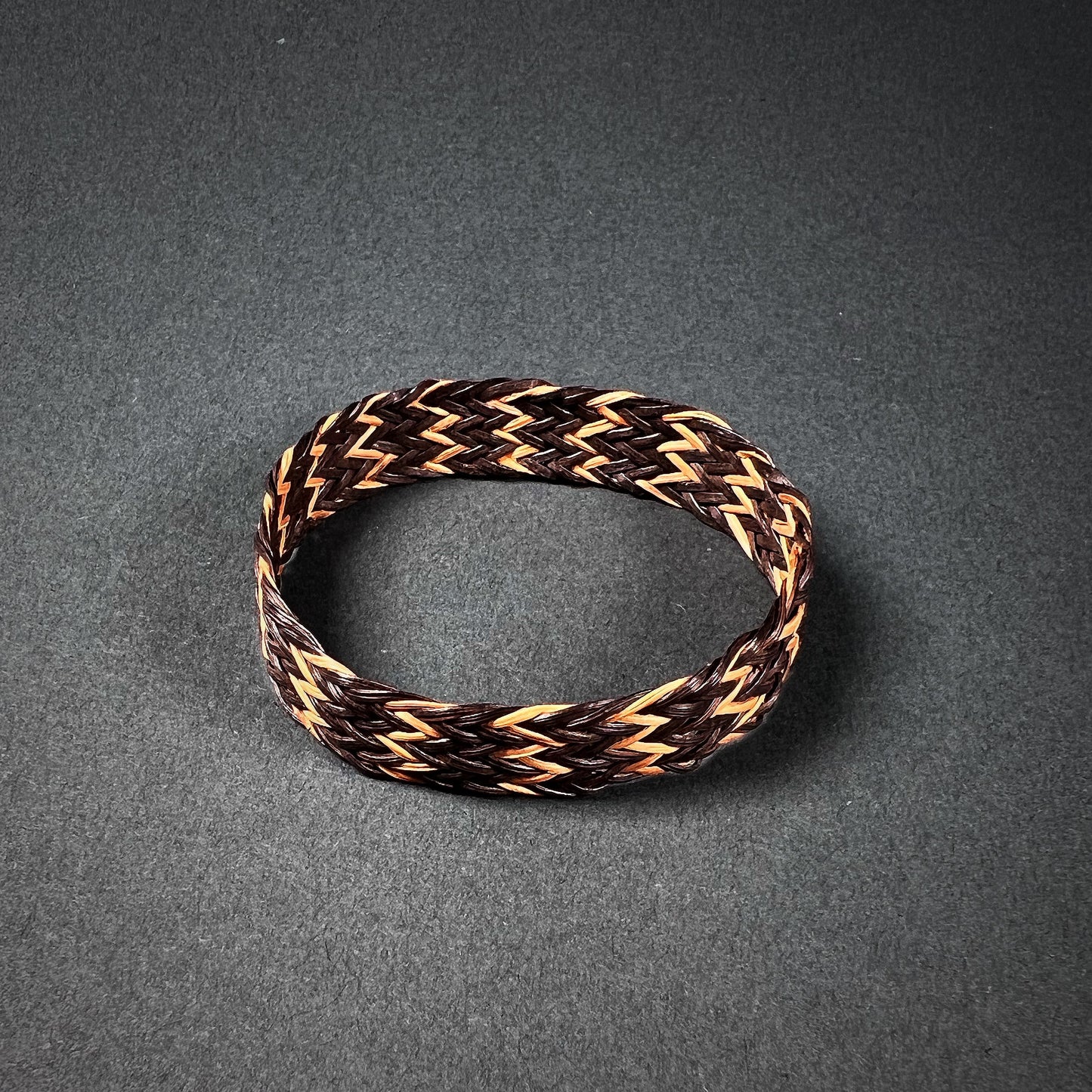
Fantastic, finely plaited small-sized ornamental bracelet (sekan), expertly woven from flexible rattan. With its tight, elegant plaiting and beautifully aged natural patina, this piece represents a classic example of highland Dani fibre artistry. Such bracelets were traditionally worn as personal adornment by men and women, and remain one of the most recognizable items within the Dani corpus of body ornaments.
The Dani inhabit the central highlands of Western New Guinea and form one of the most populous and culturally rich tribal groups in the region, closely related to the Yali, Moni and Lani. Traditional Dani settlements comprise three principal house types—honai (men’s houses), eweai (women’s houses), and leseai (cookhouses)—clustered within clan territories. Although the Dani lived in isolation until first contact with Westerners at the end of the 1930s, the Dutch established their initial colonial post in the remote Baliem Valley only in the mid-1950s. Before this period, Dani life revolved around horticulture, hunting, and gathering, supported by a highly developed material culture of fibre, stone, and wood.
The Dani were traditionally animists, their worldview shaped by land spirits, water spirits, and the restless ghosts of the newly deceased—beings believed capable of causing sickness, misfortune, or death. Central to Dani spiritual thought is edai-egen (“seeds of singing”), a vital force located beneath the sternum. Illness could disturb this essence, requiring curing rituals, while at death it transformed into a ghost (mogat), which had to be ritually encouraged to depart into the forest to avoid harming the living.
Before the introduction of metal tools in the 1960s, Dani material culture relied exclusively on stone, bone, bamboo, pig tusk, and wood. Axes (kapak), adzes, gourds for water, and tree-bark fibre bags (bilum / noken) were everyday necessities. Traditional attire was minimal: men wore a penis sheath (koteka) accompanied by feathers, pig tusks, or woven ornaments; unmarried women wore grass skirts (sili), while married women wore fibre coil skirts (yokal) or seed skirts.
Dani craftsmanship excels in its delicate woven adornments: rattan bracelets (sekan), arm and headbands (milak), cowry, feather, and bone necklaces (mikak), and impressive pig-tusk headdresses (suale). Their wealth items—polished stone valuables (ye), slabs of salt, and fibre carrying bags—played a vital role in social prestige, exchange, and ceremonial life.
A superb and authentic example of mid-20th-century Dani weaving, with excellent form, fine technique, and appealing age.
Excellent condition. Wear commensurate with age and use. Stains. Faded colors. Size approx. 4,9cm x 4,6cm x 1,0cm.
Provenance: From a Dutch private collection; reportedly originally from the holdings of a now-closed ethnographic museum and foundation in the Netherlands.
For a similar examples see:
Bracelet, Pace, Stichting Papua Erfgoed, Accession Number: EA/34/19 (https://www.papuaerfgoed.org/en/EA/34/19)
Arm-band, The British Museum, Accession Number: Oc1906,1013.333 (https://www.britishmuseum.org/collection/object/E_Oc1906-1013-333)
Bracelet, Pace, Stichting Papua Erfgoed, Accession Number: EA/41/1 (https://www.papuaerfgoed.org/en/EA/41/1)
References and further reading:
Encyclopedia of World Cultures, Oceania, Karl Heider, edited Terence Hays, G.K.Hall & Company, 1991.
Wealth Items in the Western Highlands of West Papua, Anton Ploeg, Ethnology, Vol.43. No.4 (Autumn 2004), pp. 291-313.
Papua blood: An account of West Papua, Peter Bang, BoD, 16 Apr 2018
-
Shipping
The shipment will be prepared in the course of 3-5 days and dispatched via Posti Group Oyj or purchased item(s) can be picked up from our shop during the store's opening hours (Tarkk’ampujankatu 4, 00140, Helsinki, Finland). Within the Finland, all items are shipped via Posti Group Oyj unless otherwise requested. We pack the items carefully and mainly in recycled materials because we want to save nature. You will receive the tracking number for your items by e-mail.
-
Returns
Returns and exchange will be accepted within fourteen days (14) of receipt at the purchaser’s cost to include freight and packaging. Items must be returned in the same condition as when they were shipped, and will not be accepted if damaged or altered in any way. Please inform us via email (info@gotanmaailma.fi) or by calling +358408408352 before sending. We do not accept returns more than 14 days after delivery.