

Ewe or Fon Vodun Fetish Figure
Ewe or Fon Vodun Fetish Figure
Couldn't load pickup availability
Fon or Ewe people, mid-20th century, Togo, Benin, or Ghana, West Africa
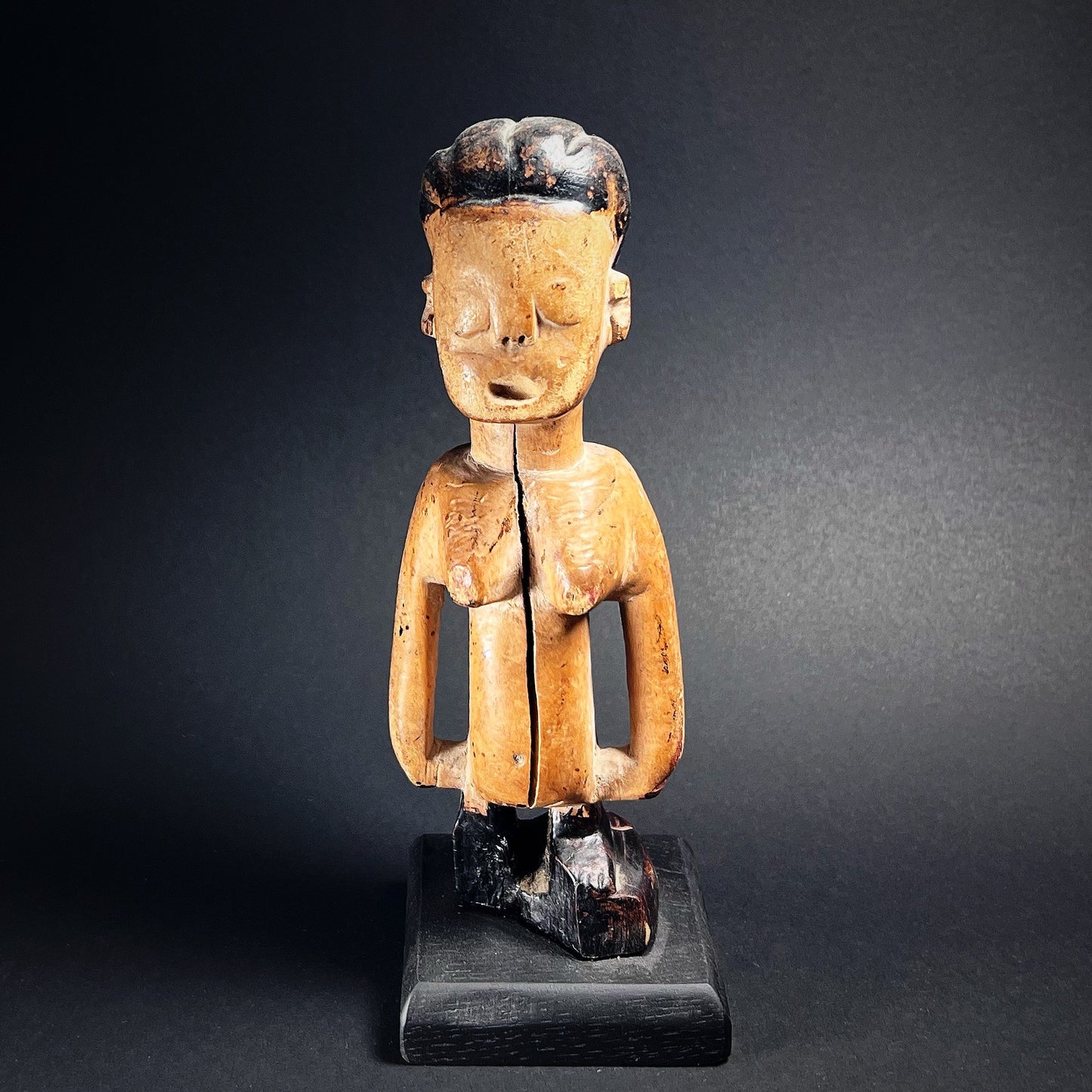
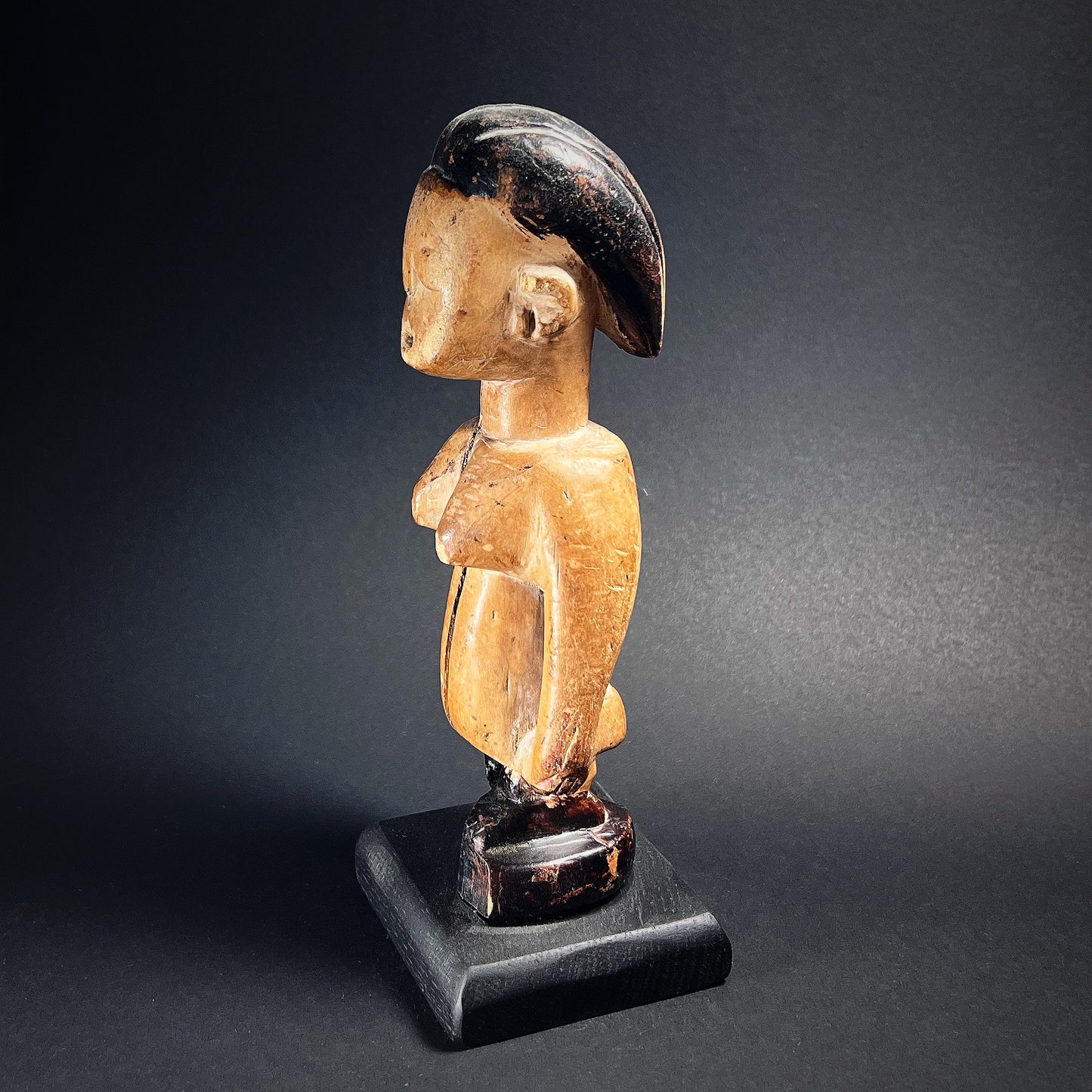
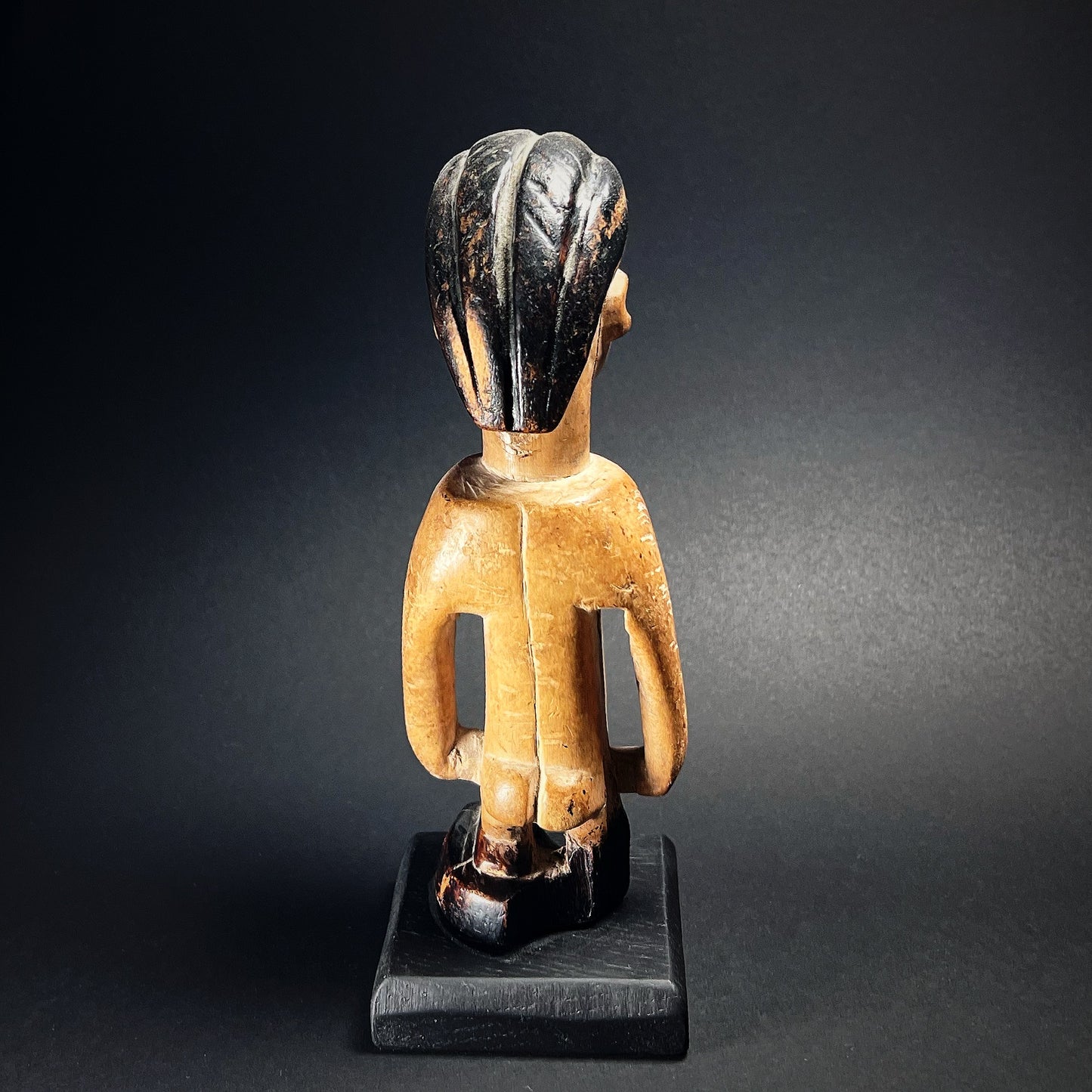
Superb wooden vodun fetish or altar figure, crudely yet expressively carved in a standing posture with both hands held to the sides of the body. The figure displays highly stylized features, worn facial details, a painted coiffure, round breasts, a small navel, and bulky painted feet. Beautiful traces of pigments and libations remain across the surface, creating a rich golden-brown patina accumulated through prolonged ritual handling and ceremonial use.
Fetish figures of this kind were created to protect individuals or families against misfortune, sorcery, illness, or theft, and to ensure strength, prosperity, and spiritual support. Among the Fon, the traditional religion—Vodoun (also Vodun, Vodu, Voudou)—centers on “numerous immortal spirits and deities.” Fon religious life is structured around four overlapping spheres: public gods, personal gods, ancestral spirits, and magical charms. Ancestor veneration holds a central place in family and social organization; most traditional home compounds maintain a Dexoxos, or ancestral shrine, where the tovodu (family gods) are honored annually with offerings, dancing, and song.
In Fon cosmology, the supreme and androgynous creator Nana Buluku gave birth to the divine twins Mawu (female, night) and Lisa (male, day). After creation, Nana Buluku withdrew, leaving the governance of the universe to Mawu-Lisa and the pantheon of spirits. Vodun cosmology is an intricate hierarchy ranging from major deities of nature and society to the spirits inhabiting rivers, trees, stones, and the protective ethnic vodun spirits associated with clans and communities.
Vodun practice also influences healing. Priests and healers employ plants, ritual substances, dried animal parts, and spiritually charged fetishes believed to house active spirits. These talismanic objects—known locally as gbo, gris-gris, juju, or obeah—act as mediators to public or family gods. They are said to have been given to humans by Legba, by Sangbata (the earth deity associated with smallpox), and by the forest-dwelling aziza spirits.
The Ewe share deeply intertwined cultural and religious traditions with the Fon, including Afa divination, the Legba cult, and a pantheon of shared deities such as Mawu. Equally important is the Ewe deity of the sacred forest, Nyigbla, and the Yehve spirits, among them Heviesso, the god of thunder and lightning.
This exceptional figure exemplifies the powerful sculptural language and spiritual resonance of Vodun art, embodying generations of ritual use, ancestral veneration, and protective intent.
Good condition. Wear commensurate with age and use. Minor wormholes and small natural imperfections. Fractures and cracks. Size approx. 19,5cm x 7,0cm excluding the modern stand.
Provenance: Finnish private collection.
References and further reading:
African Vodun: Art, Psychology and Power, Suzanne Preston Blier, University of Chicago Press, 1995.
Vodún/Vodu, Resistance, and North/South Relations in Undemocratic Togo, Eric J. Montgomery, Brill, Journal of Religion in Africa, pp. 224-248, 2020.
Vodou, Serving the Spirits, The Pluralism Project, Harward University, 2020.
Four Vodun Ceremonies, George Eaton Simpson, The Journal of American Folklore, Vol. 59, No. 232, pp. 154-167, Amercan Folklore Society, 1946.
Contemporary Vodun Arts of Ouidah, Benin, Dana Rush, African Arts, Vol. 34, No. 4, pp. 32-47 + 94-96, UCLA, 2001.
They Died in Blood: Morality and Communitas in Ewe Ritual, Eric J. Montgomery, Journal of Ritual Studies, Vol. 32, No. 1, pp. 25-40, 2018.
-
Shipping
The shipment will be prepared in the course of 3-5 days and dispatched via Posti Group Oyj or purchased item(s) can be picked up from our shop during the store's opening hours (Tarkk’ampujankatu 4, 00140, Helsinki, Finland). Within the Finland, all items are shipped via Posti Group Oyj unless otherwise requested. We pack the items carefully and mainly in recycled materials because we want to save nature. You will receive the tracking number for your items by e-mail.
-
Returns
Returns and exchange will be accepted within fourteen days (14) of receipt at the purchaser’s cost to include freight and packaging. Items must be returned in the same condition as when they were shipped, and will not be accepted if damaged or altered in any way. Please inform us via email (info@gotanmaailma.fi) or by calling +358408408352 before sending. We do not accept returns more than 14 days after delivery.