

Ewe or Fon Vodun Shrine Figure (Bocio)
Ewe or Fon Vodun Shrine Figure (Bocio)
Couldn't load pickup availability
Fon or Ewe peoples, mid-20th century, Togo, Benin or Ghana, West Africa
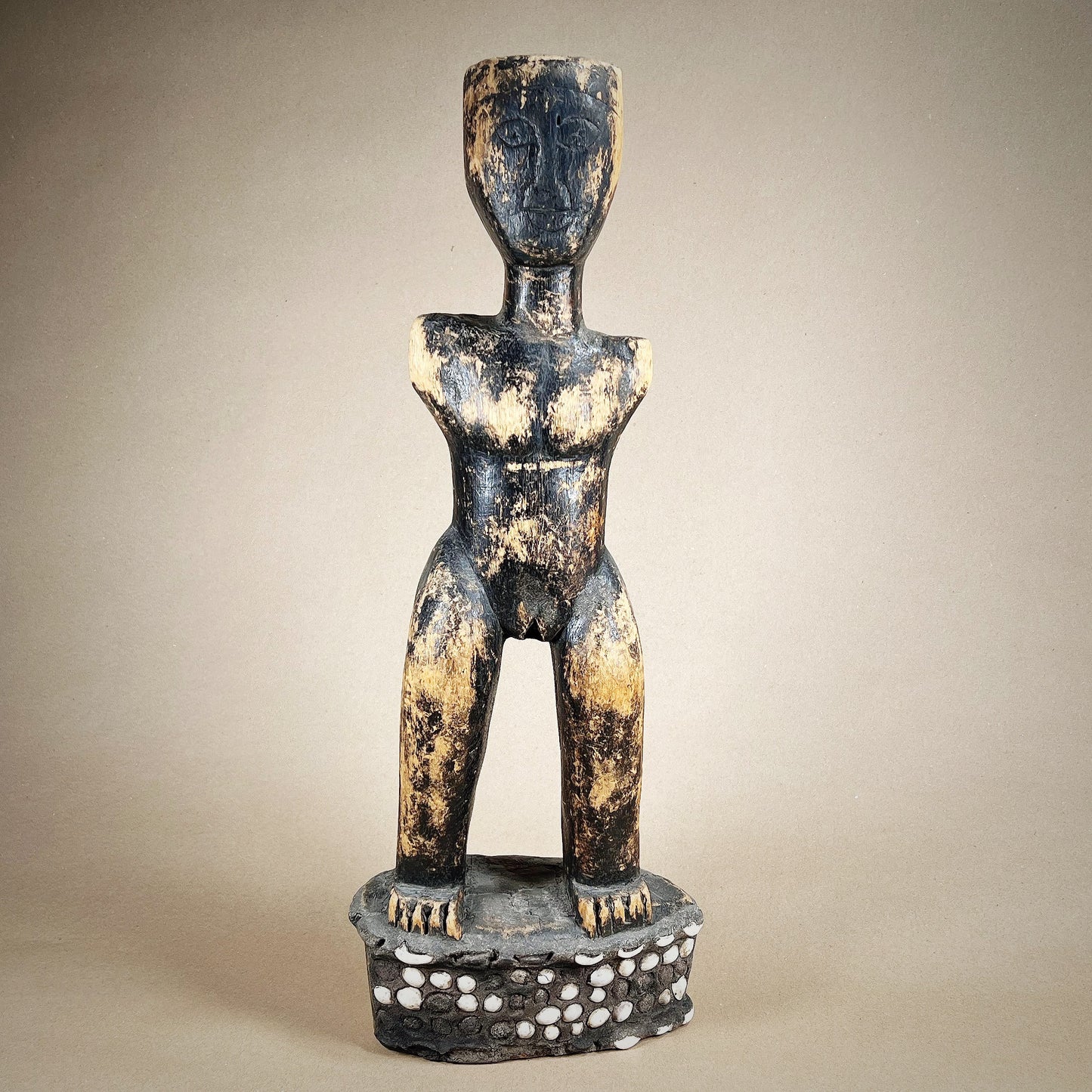
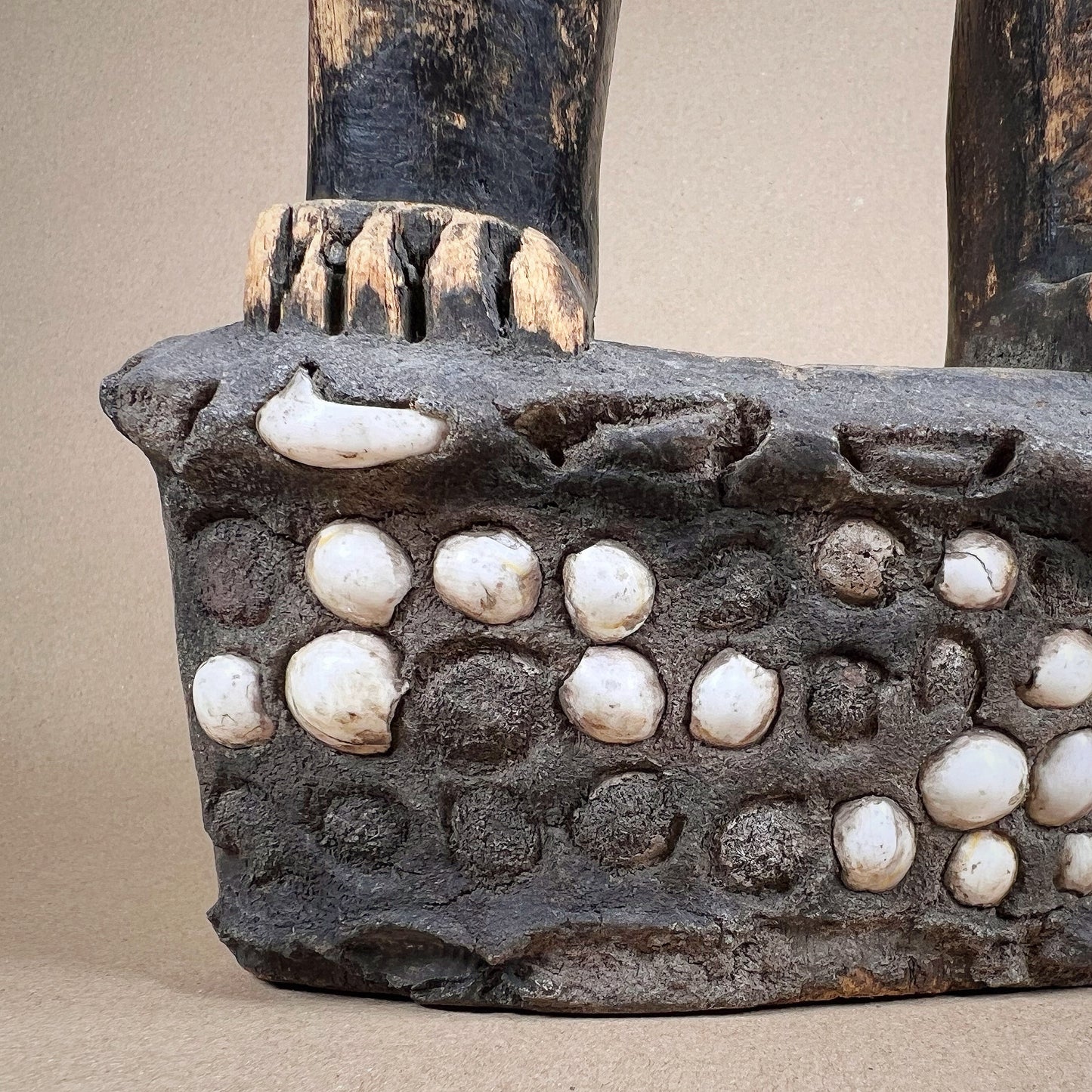
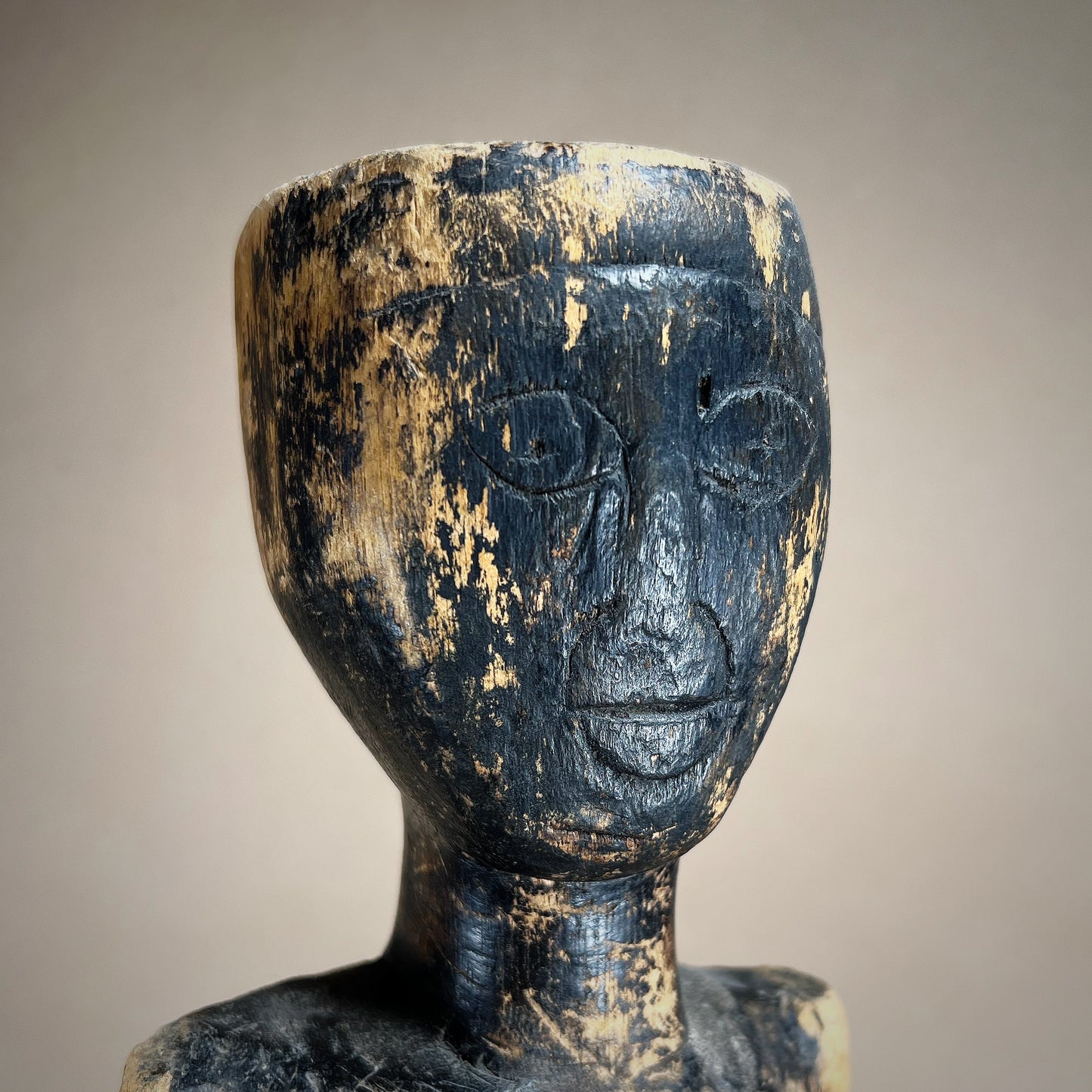
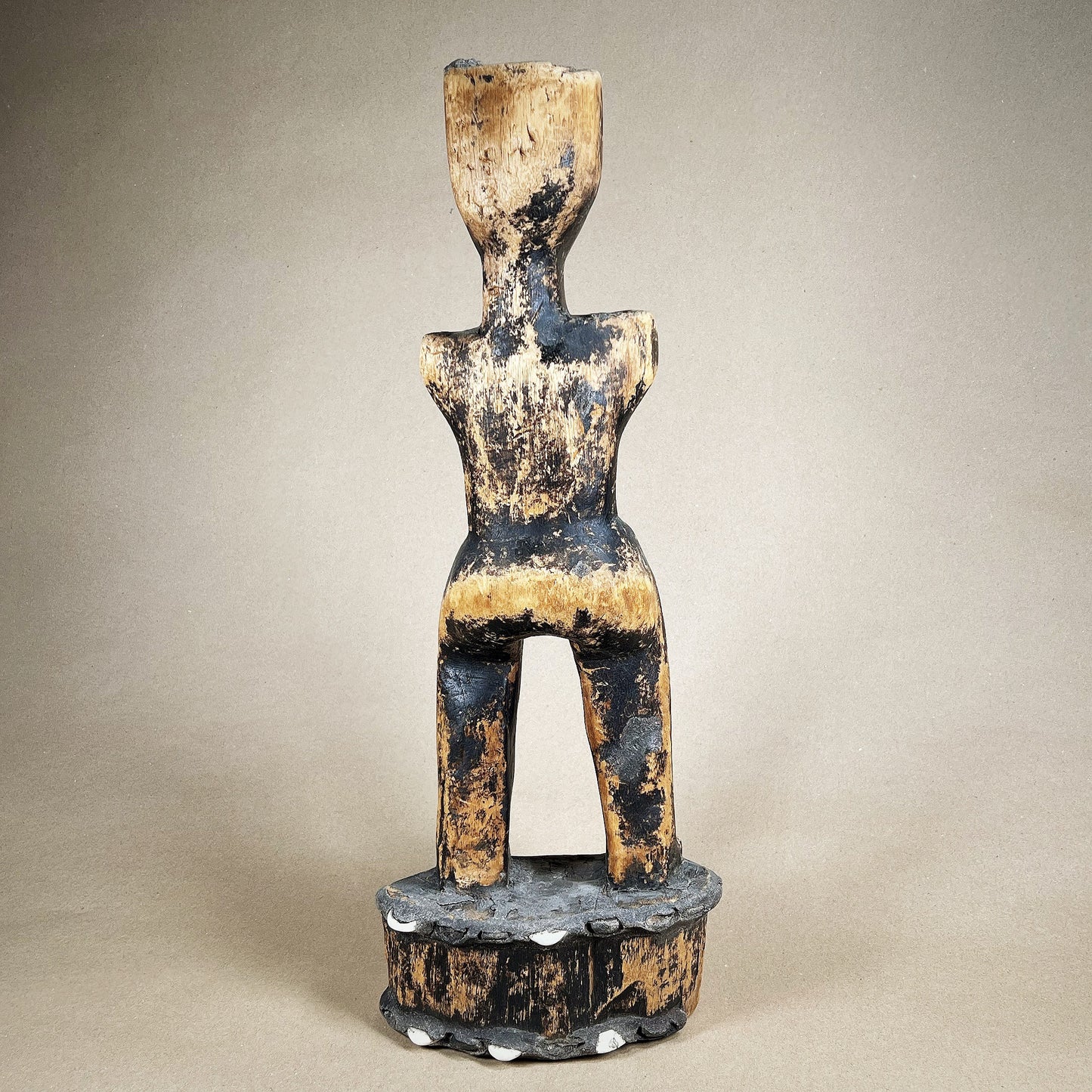
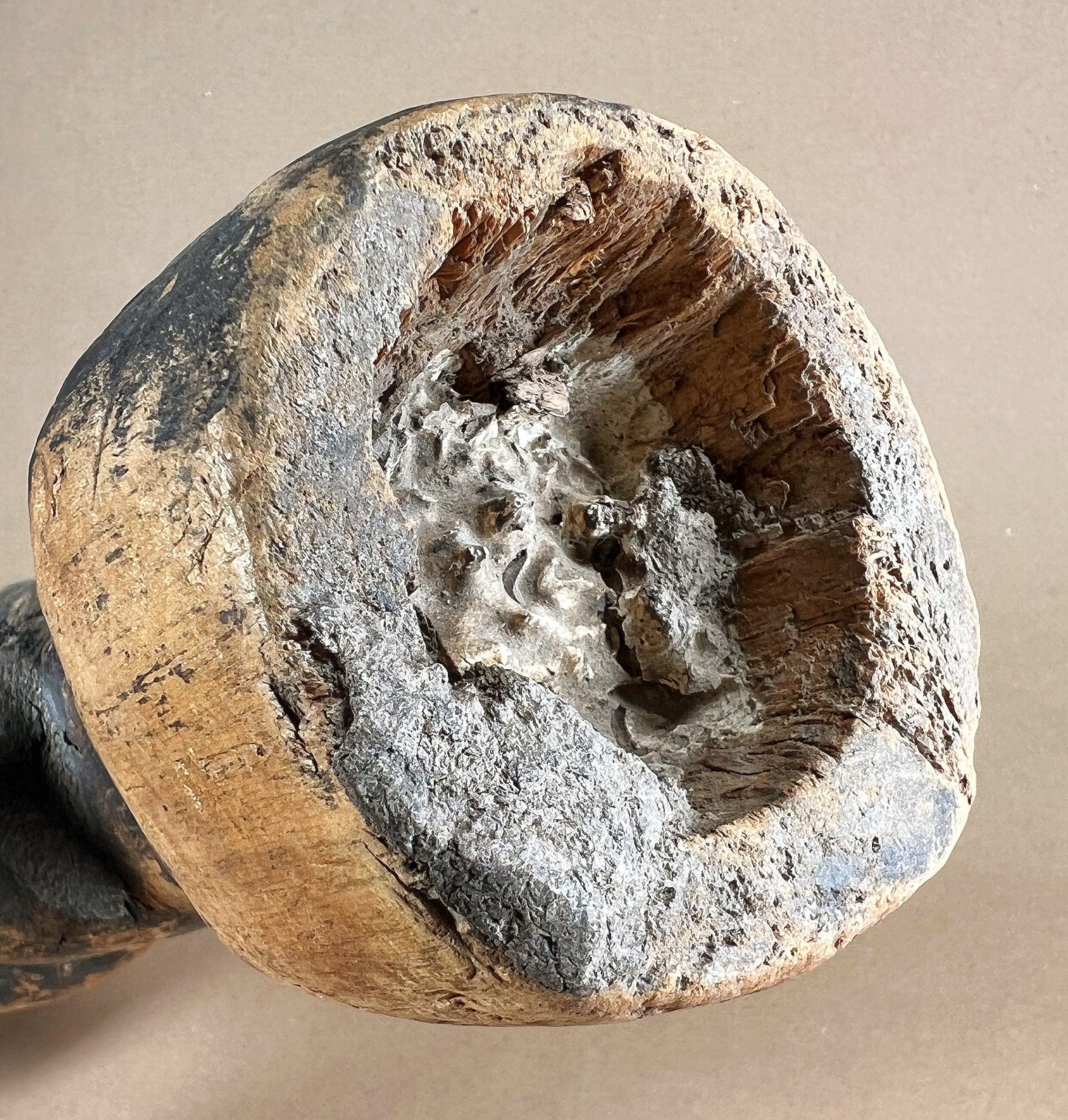
Impressive and highly unusual older Vodun shrine figure, carved from a single block of light wood and dyed deep black. The piece depicts a strongly stylized standing female figure without arms, supported by powerful legs rising from a cylindrical base enriched with clay, resin, cowrie shells, and other ritually significant materials. The facial features—now heavily worn—have been re-engraved several times, attesting to long devotional use. A hollow cavity at the top of the head once held sacrificial substances, remnants of which remain visible. The genital area has been reshaped with clay and resin, further emphasising its ritual charge.
In Ewe and Fon Vodun practice, bocio (or bochio, boccio) are carved wooden figures designed to attract, contain, and direct spiritual forces. They may be empowered for protection, healing, justice, divination, or, in some cases, aggression against harmful influences. Activated through offerings, speech, saliva, blood, and libations, bocio serve as potent intermediaries between humans and the vast world of spirits.
Vodun cosmology encompasses a hierarchy of deities, ancestors, nature spirits, and personal gods, with lineage shrines and domestic altars forming the core of religious life. Within this system, bocio function as dynamic ritual tools—objects inhabited by power, capable of securing well-being, defending against threats, or channelling the assistance of protective spirits.
This striking and deeply charged example, with its layered materials, reworked features, and long history of ritual handling, is a rare and powerful witness to the enduring spiritual traditions of the Fon and Ewe peoples.
Good condition. Wear commensurate with age and use, with worm holes, chips and fractures. Size approx. 49,0cm x 17,5cm x 9,5cm.
Provenance: Finnish private collection.
References and further reading:
African Vodun: Art, Psychology and Power, Suzanne Preston Blier, University of Chicago Press, 1995.
Vodún/Vodu, Resistance, and North/South Relations in Undemocratic Togo, Eric J. Montgomery, Brill, Journal of Religion in Africa, pp. 224-248, 2020.
Vodou, Serving the Spirits, The Pluralism Project, Harward University, 2020.
Four Vodun Ceremonies, George Eaton Simpson, The Journal of American Folklore, Vol. 59, No. 232, pp. 154-167, Amercan Folklore Society, 1946.
Contemporary Vodun Arts of Ouidah, Benin, Dana Rush, African Arts, Vol. 34, No. 4, pp. 32-47 + 94-96, UCLA, 2001.
They Died in Blood: Morality and Communitas in Ewe Ritual, Eric J. Montgomery, Journal of Ritual Studies, Vol. 32, No. 1, pp. 25-40, 2018.
-
Shipping
The shipment will be prepared in the course of 3-5 days and dispatched via Posti Group Oyj or purchased item(s) can be picked up from our shop during the store's opening hours (Tarkk’ampujankatu 4, 00140, Helsinki, Finland). Within the Finland, all items are shipped via Posti Group Oyj unless otherwise requested. We pack the items carefully and mainly in recycled materials because we want to save nature. You will receive the tracking number for your items by e-mail.
-
Returns
Returns and exchange will be accepted within fourteen days (14) of receipt at the purchaser’s cost to include freight and packaging. Items must be returned in the same condition as when they were shipped, and will not be accepted if damaged or altered in any way. Please inform us via email (info@gotanmaailma.fi) or by calling +358408408352 before sending. We do not accept returns more than 14 days after delivery.