

Khmer Angkor Period Bronze Covered Lime Box
Khmer Angkor Period Bronze Covered Lime Box
Couldn't load pickup availability
Khmer Empire, Angkor period, 12th–13th century AD, Cambodia
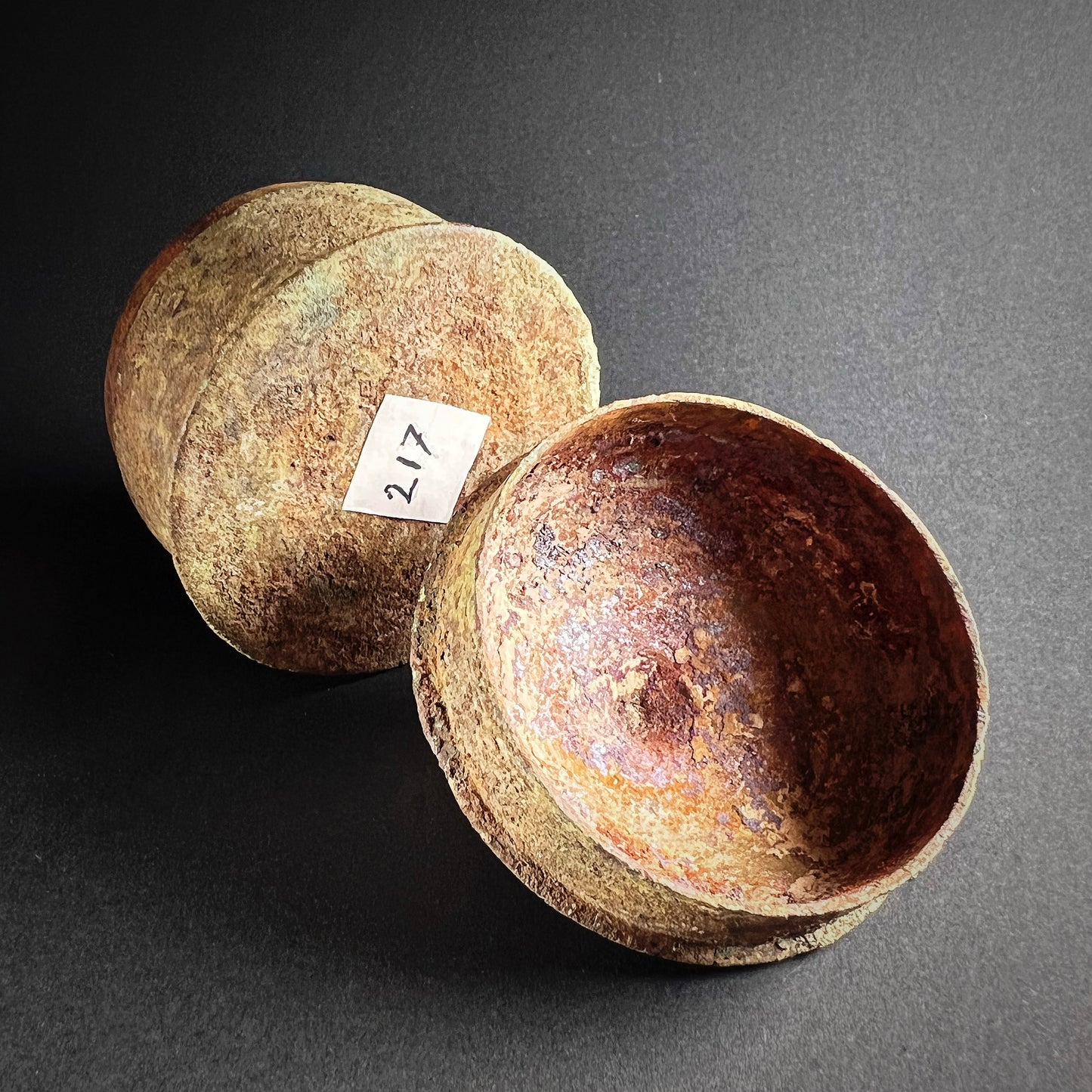
An elegant and finely cast bronze lime container dating to the 12th or 13th century, produced during the Angkor period of the Khmer Empire. The vessel is composed of two separately cast sections and takes an almost cylindrical form, fitted with small ringlets at the edges of both the rim and the base. The sides are ornamented with neatly incised linear decoration, lending subtle rhythm and refinement to the surface.
The domed cover is surmounted by a traditional bud-shaped finial, a form closely associated with Khmer decorative vocabulary and temple architecture. The harmonious proportions and restrained ornamentation reflect the sophisticated aesthetic sensibility of Khmer metalwork during this flourishing period.
Such vessels were used to hold slaked lime, an essential component in the preparation of betel nut, a mixture traditionally chewed with spices for its mildly intoxicating and social effects throughout Southeast Asia. The lime—derived from shell, coral, or limestone—neutralised the bitterness of the betel nut and facilitated the release and absorption of its active properties. Lime containers of this type were not merely utilitarian but also functioned as symbols of refinement and status, often crafted with great care and artistic intent.
At its zenith, the Khmer Empire was among the most powerful and influential civilisations of Southeast Asia, extending across much of present-day Cambodia, Thailand, Laos, and Vietnam. Its capital at Angkor is renowned for monumental architectural achievements such as Angkor Wat and the Bayon, enduring testaments to Khmer ingenuity, spirituality, and wealth.
This bronze lime container embodies the cultural richness and daily ritual practices of the Angkor period, offering a tangible connection to the artistic sophistication and grandeur of the Khmer Empire. A compelling and historically significant artifact of a remarkable civilisation.
Excellent condition. Age-related wear and signs of weathering and erosion, encrustations, small scratches, and light nicks. Still contains remnants of its original contents. Lovely patina with rich green and russet oxidization. Size approx. 6,0cm x 5,5cm x 5,5cm.
Tagged underneath with the label “217.” Accompanied by the original collector’s register card (no. 217), dated 4 October 1973.
Provenance: Swedish private collection. The collector worked for the State Department during the 1960s–1980s, with postings in Asia and a period of residence in Japan. The collection was systematically numbered and documented in the early 1970s with handwritten cards arranged in a register book; some objects were also photographically recorded.


-
Shipping
The shipment will be prepared in the course of 3-5 days and dispatched via Posti Group Oyj or purchased item(s) can be picked up from our shop during the store's opening hours (Tarkk’ampujankatu 4, 00140, Helsinki, Finland). Within the Finland, all items are shipped via Posti Group Oyj unless otherwise requested. We pack the items carefully and mainly in recycled materials because we want to save nature. You will receive the tracking number for your items by e-mail.
-
Returns
Returns and exchange will be accepted within fourteen days (14) of receipt at the purchaser’s cost to include freight and packaging. Items must be returned in the same condition as when they were shipped, and will not be accepted if damaged or altered in any way. Please inform us via email (info@gotanmaailma.fi) or by calling +358408408352 before sending. We do not accept returns more than 14 days after delivery.