


Ming Dynasty Swatow Ware Porcelain Dish
Ming Dynasty Swatow Ware Porcelain Dish
Couldn't load pickup availability
Late Ming Dynasty, c. 1580–1620 AD, Zhangzhou Prefecture, Fujian Province, China
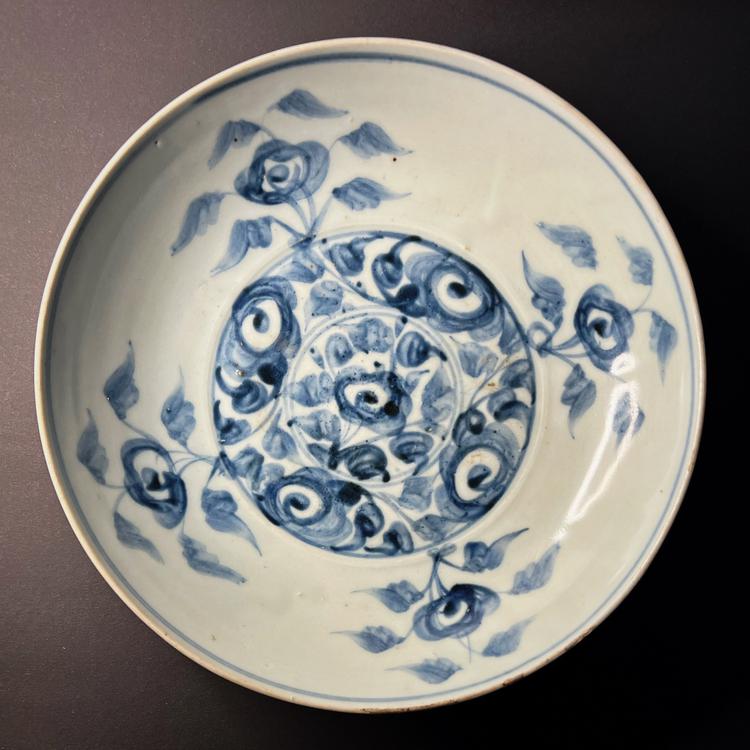
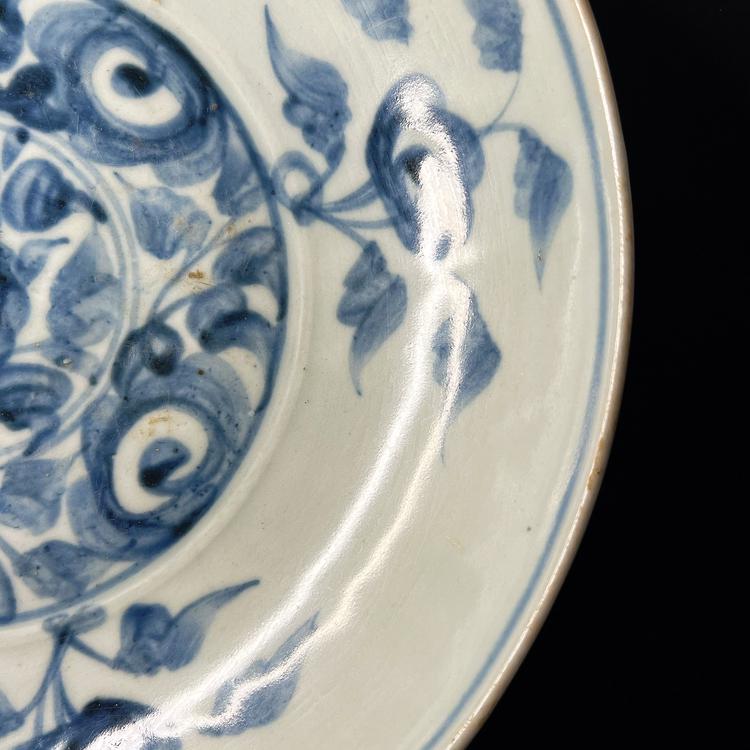
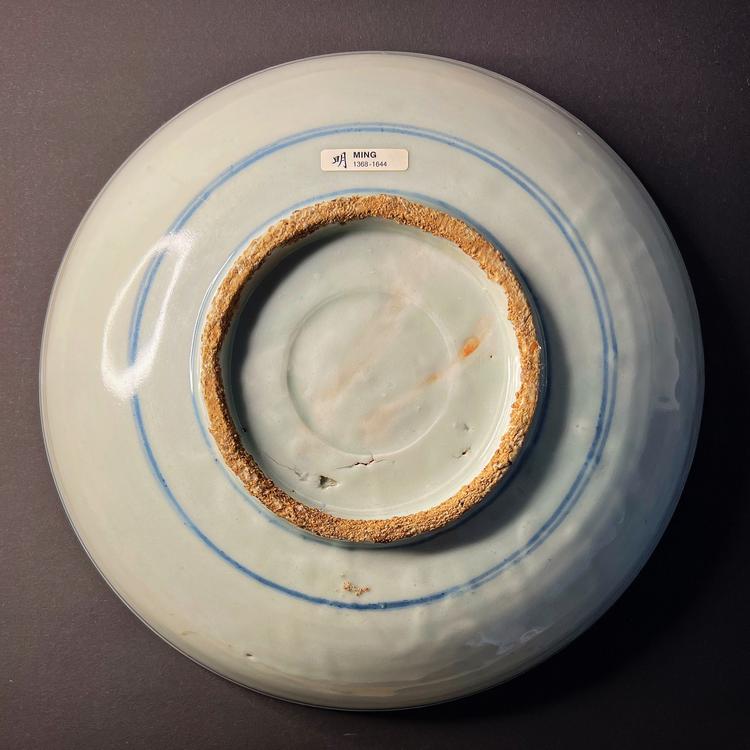
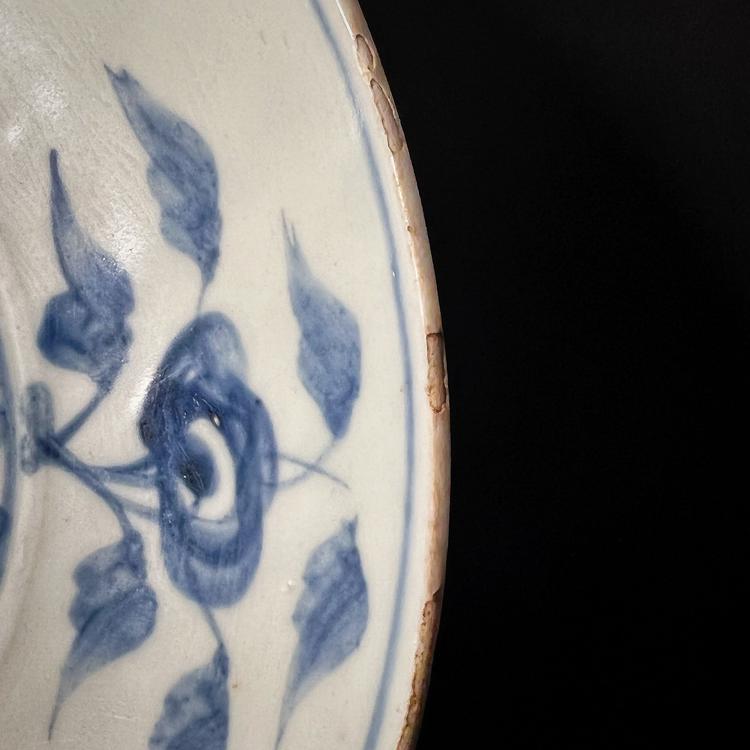
An absolutely stunning and important large Swatow (Zhangzhou) ware dish, richly decorated in underglaze blue with a central floral spray enclosed by a delicate sketchy band. The painting style is bold, spontaneous, and free-flowing, characteristic of early Swatow production. The sides and rim are adorned with four groups of floral sprays, while the reverse features four concentric bands painted in underglaze blue.
This expressive painting method, with its lively brushwork and informal rhythm, suggests an early production phase that may have extended into the early seventeenth century. Common decorative themes of the period include flower motifs such as peony, lotus, and chrysanthemum, all symbolic of renewal, purity, and longevity in Chinese art.
Produced during the late Ming dynasty (1368–1644), Swatow—or Zhangzhou—ware represents a distinct class of export porcelain primarily intended for the Southeast Asian market. The kilns were dispersed throughout Fujian’s coastal region, particularly around Zhangzhou and Pinghe County, with the most significant production sites located at Da Long and Er Long in Wuzhai, and Huazai Lou in Nansheng. Archaeological evidence suggests active production between c. 1575 and 1650, with its peak around 1620.
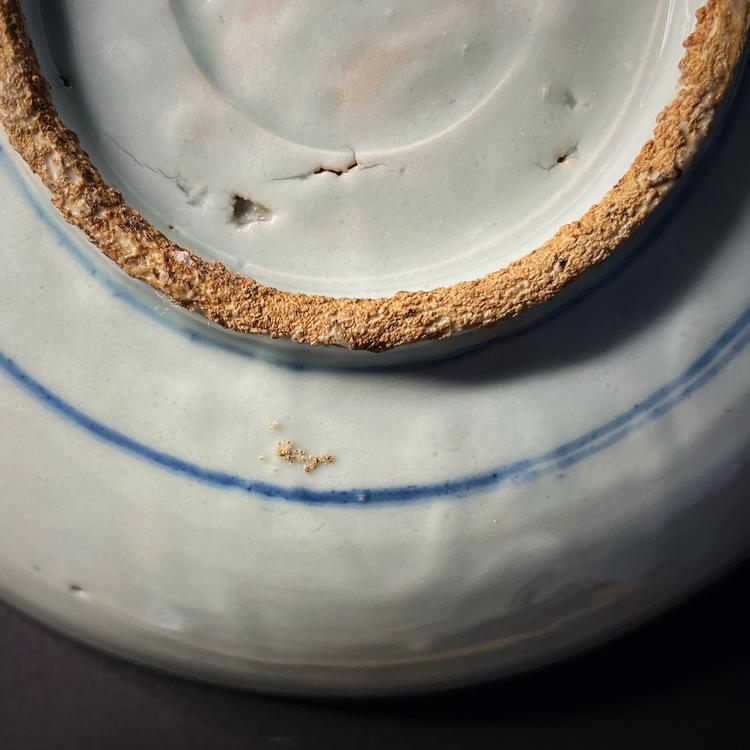
Typically coarse and thickly potted, Swatow ware was often under-fired and shows traces of kiln grit adhering to the glaze—testament to the smaller, less industrialized potteries that made them. These wares were fired in dragon kilns (lung-yao) and predominantly wheel-thrown, though moulds were occasionally used. The underglaze blue and white decoration, rendered in cobalt, remains the most iconic and enduring hallmark of Swatow ceramics.
An exceptional and well-preserved example of early 17th-century Zhangzhou porcelain, showcasing the vigorous artistry and dynamic export tradition of late Ming China.
Excellent condition. Intact. Light surface wear consistent with age and use. Glazing defects and firing flaws. Footring has kiln grits. Size approx. 31,4cm x 31,2cm x 7,7cm.
Provenance: Swedish private collection
References and further reading:
The Ceramic Trade Across the South China Sea c. AD 1350-1650, Barbara Harrisson, Journal of the Malaysian Branch of the Royal Asiatic Society, Vol. 76, No. 1, 2003, pp. 99-114.
Swatow, Barbara Harrisson, Publisher: Museum het Princessehof, Leeuwarden, 1979.
The Wares of the Transitional Period between the Ming and the Ch'Ing 1620-1683, Soame Jenyns, Archives of the Chinese Art Society of America, Published By: Duke University Press, Vol. 9, 1955, pp. 20-42.
Zhangzhou (Swatow) Ceramics. Sixteenth to Seventeenth Centuries Found In Indonesia, Sumarah Adhyatman, Publisher: The Ceramic Society of Indonesia, 1999.
-
Shipping
The shipment will be prepared in the course of 3-5 days and dispatched via Posti Group Oyj or purchased item(s) can be picked up from our shop during the store's opening hours (Tarkk’ampujankatu 4, 00140, Helsinki, Finland). Within the Finland, all items are shipped via Posti Group Oyj unless otherwise requested. We pack the items carefully and mainly in recycled materials because we want to save nature. You will receive the tracking number for your items by e-mail.
-
Returns
Returns and exchange will be accepted within fourteen days (14) of receipt at the purchaser’s cost to include freight and packaging. Items must be returned in the same condition as when they were shipped, and will not be accepted if damaged or altered in any way. Please inform us via email (info@gotanmaailma.fi) or by calling +358408408352 before sending. We do not accept returns more than 14 days after delivery.