


Nariño Terracotta Pedestal Bowl
Nariño Terracotta Pedestal Bowl
Couldn't load pickup availability
Nariño-Carchi Culture, Piartal or Tuza Phase, c. 750–1500 AD, Southwestern Colombia
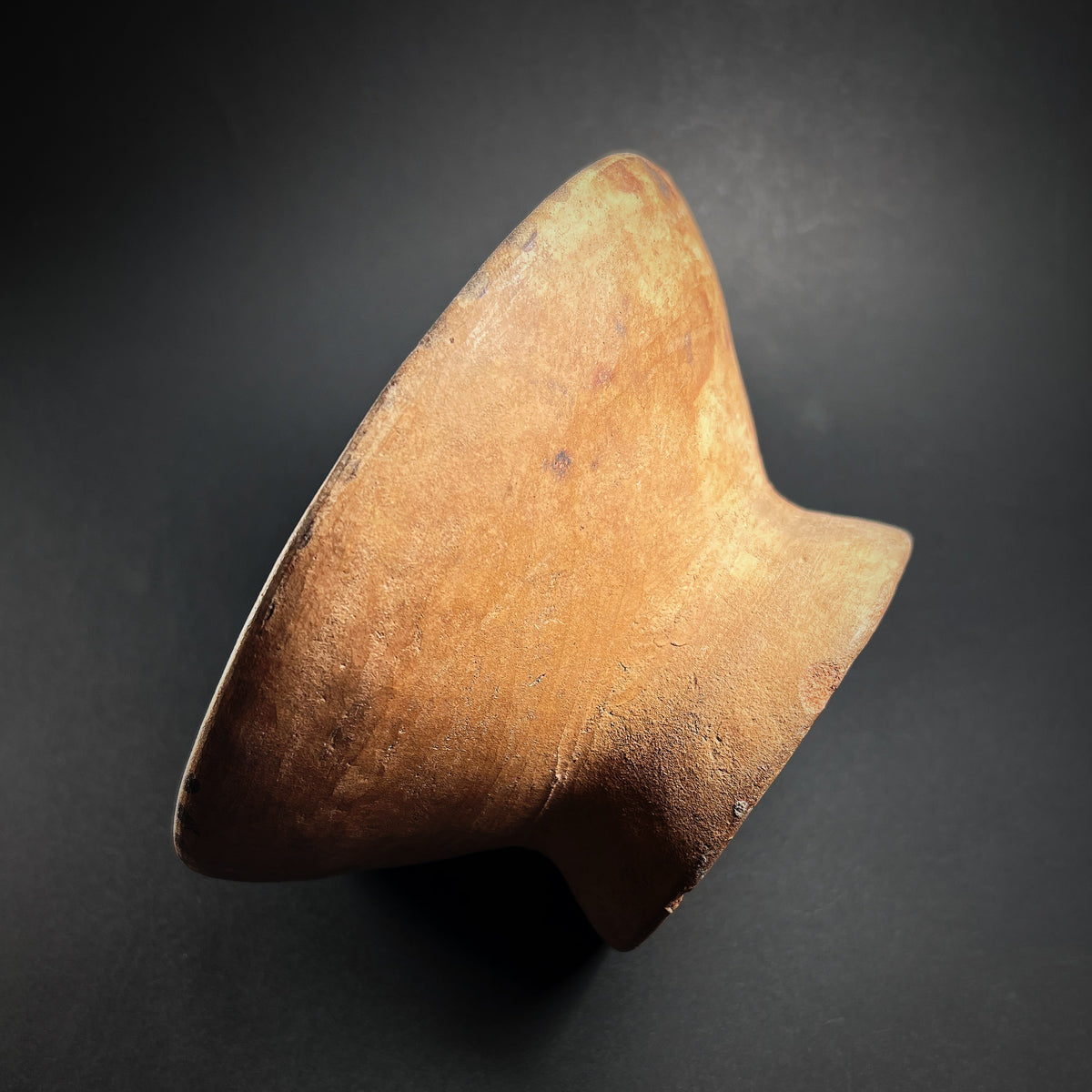
An exceptionally attractive footed pedestal bowl, known as a compotera, belonging to the ceramic tradition of the Nariño culture of southwestern Colombia. Hand-modelled with a deep, generously proportioned bowl raised on a stepped foot ring, the vessel is distinguished by its carefully executed interior decoration, painted in earthy mineral pigments over a warm terracotta-red ground.
The interior features a striking symmetrical quadripartite composition. Four broad, trapezoidal panels extend outwards from an unpainted central area towards the rim, together forming a bold cross-shaped design. Their edges are precisely outlined with fine dark brown lines, clearly separating the cream-white and greenish gray panels from the surrounding red ground. Within the four triangular spaces between the arms of the cross, close to the rim, are four identical stylised human faces. Each is rendered with remarkable economy of line: a curved dark brown contour defines the chin, while a vertical rectangular mark forms the nose, flanked by almond-shaped eyes with central dots. A delicate curved stroke beneath the nose completes each mouth, giving the faces a calm, composed expression.
The carefully balanced arrangement demonstrates a sophisticated understanding of symmetry, proportion, and decorative rhythm. The interplay between the unpainted terracotta, earthy mineral colours, and finely drawn facial motifs creates a visually compelling composition, in which geometric abstraction and stylised human imagery are seamlessly integrated.
The Nariño-Carchi cultural tradition developed in the highlands of southwestern Colombia and neighbouring northern Ecuador, producing some of the most distinctive ceramics of the northern Andes. Its pottery is particularly admired for its carefully controlled forms, elaborate painted decoration, and recurring geometric and anthropomorphic motifs. Pedestal bowls, or compoteras, are among the characteristic vessel types of the region. Their elevated form and richly decorated interiors suggest that they held a special place within the material culture of these communities, although their precise functions may have varied.
With its elegant pedestal form, beautifully preserved painted decoration, and unusual arrangement of four stylised faces, this bowl is a particularly appealing example of Nariño ceramic artistry. Combining bold geometric design with subtle figurative details, it offers collectors a fascinating glimpse into the visual language and artistic achievements of the ancient northern Andes.
Excellent condition. Intact. Minor surface wear and abrasions consistent with age. Small chip in the foot. Attractive encrusted patina. Size approx. 16,5cm x 16,3cm x 8,0cm.
Provenance: Inherited from a private collection belonging to a close relative, H-G Von Friedrich (1925–1977). The objects were acquired during his stay in Peru in the 1950s–60s and subsequently brought to Sweden.


-
Shipping
The shipment will be prepared in the course of 3-5 days and dispatched via Posti Group Oyj or purchased item(s) can be picked up from our shop during the store's opening hours (Tarkk’ampujankatu 4, 00140, Helsinki, Finland). Within the Finland, all items are shipped via Posti Group Oyj unless otherwise requested. We pack the items carefully and mainly in recycled materials because we want to save nature. You will receive the tracking number for your items by e-mail.
-
Returns
Returns and exchange will be accepted within fourteen days (14) of receipt at the purchaser’s cost to include freight and packaging. Items must be returned in the same condition as when they were shipped, and will not be accepted if damaged or altered in any way. Please inform us via email (info@gotanmaailma.fi) or by calling +358408408352 before sending. We do not accept returns more than 14 days after delivery.