

Lobi Bronze Armlet Currency Manilla
Lobi Bronze Armlet Currency Manilla
Couldn't load pickup availability
Lobi peoples, early to mid 20th century, Burkina Faso, West Africa
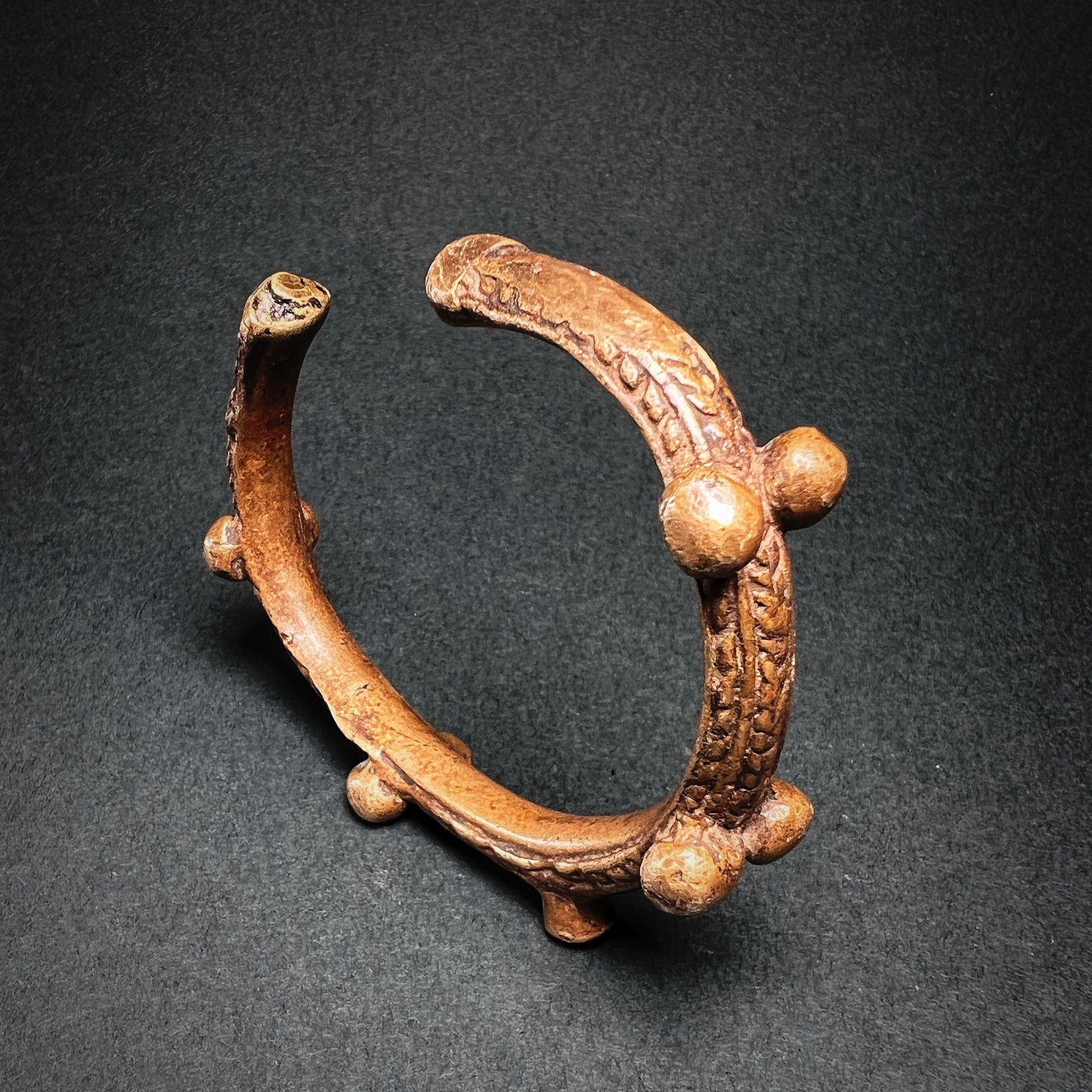
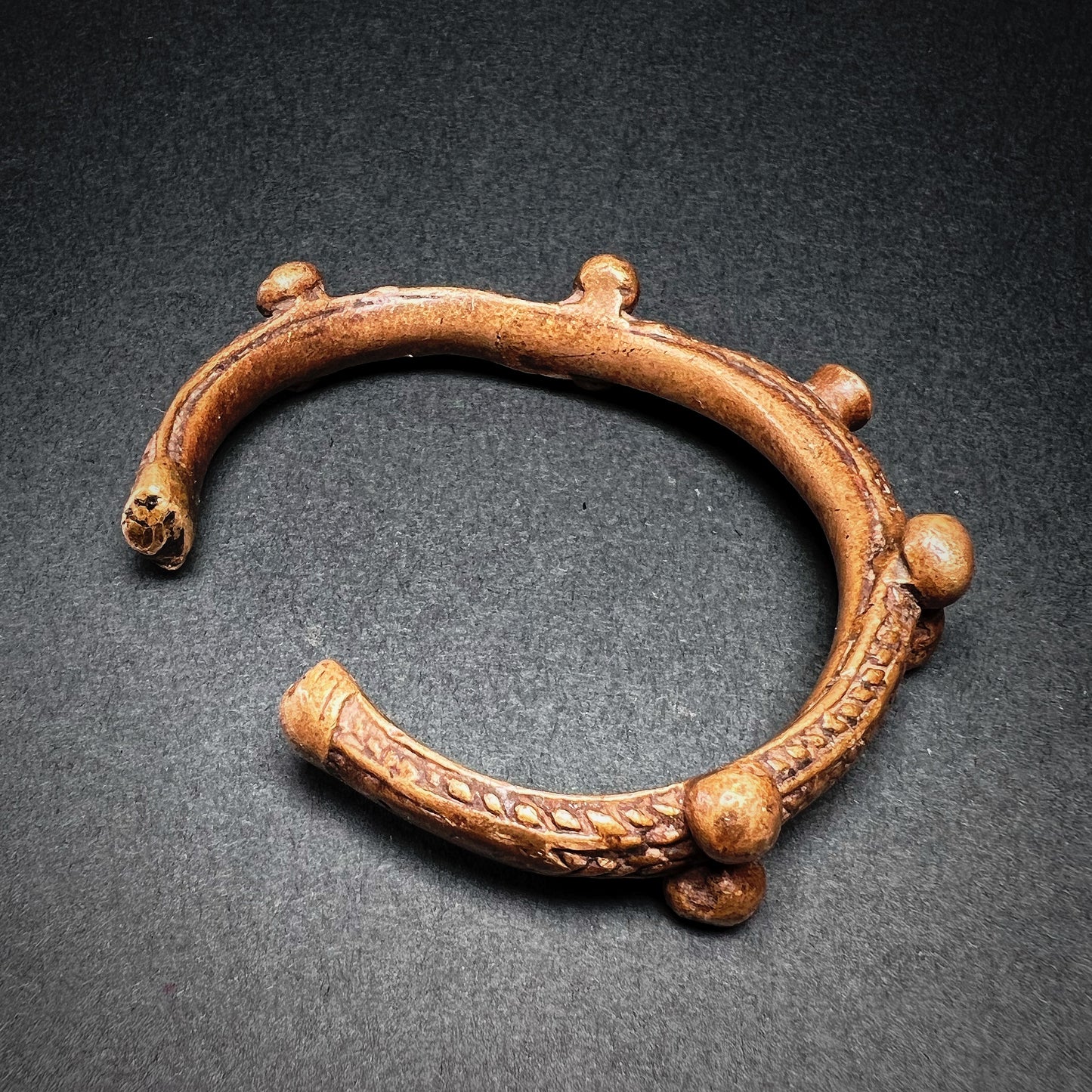
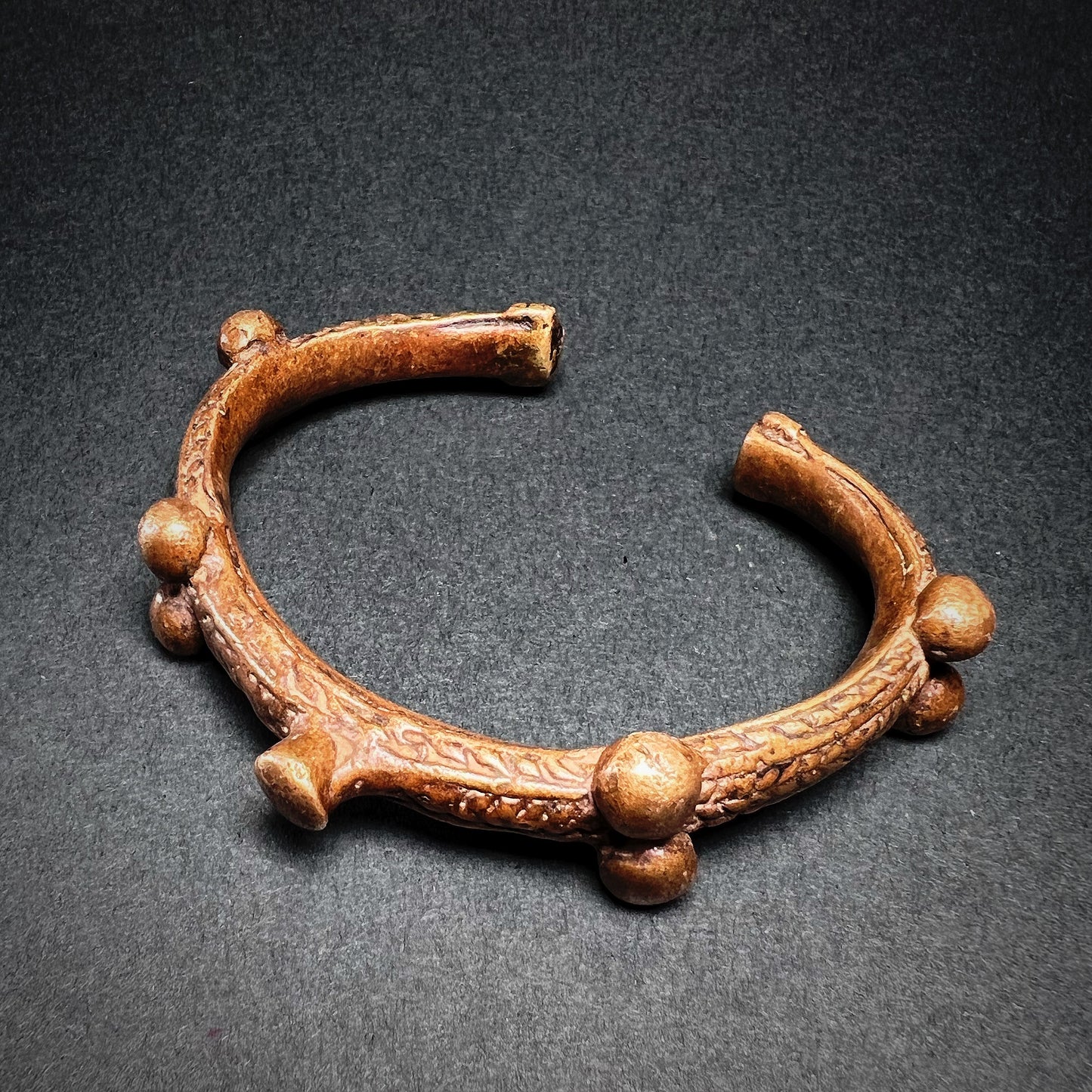
An exceptional Lobi bronze manilla, cast using the traditional lost-wax method and displaying the refined sculptural sensibility for which Lobi metalwork is admired. This aged armlet or anklet is divided into rhythmic decorative sections, each featuring deeply carved panels framed by pairs of raised, rounded knobs that create a bold and tactile surface.
Manillas served as a primary form of commodity currency throughout West Africa—typically horseshoe-shaped with opposing, thickened terminals. Produced in numerous regional styles, they functioned both as monetary units and as prized personal adornments. Within Lobi communities, such bronze forms also carried symbolic weight, reflecting social status, exchange, and long-standing ritual traditions. The Lobi peoples, known as the “children of the forest,” maintained a complex animist worldview in which metal objects played a role within broader spiritual and social systems.
A superb and authentic example of West African bronze currency, notable for its craftsmanship, patination, and sculptural presence—ideal for collectors of African art, ethnographic objects, or early world exchange systems.
Excellent condition. Wear consistent with age and use. Beautiful polished patina. Size approx. 8,2cm x 7,0cm x 1,7cm.
Provenance: Swedish private collection.
References and further reading:
The Teach Yourself Guide to Numismatics, C.C. Chamberlain, English Universities Press. 1963, p. 92.
The West African Manilla Currency: Research and Securing of Evidence from 1439-2019, Rolf Denk, Tredition GmbH, Hamburg, 2020.
Primitive Money in its ethnological, historical and economic aspects, Paul Einzig, Eyre & Spottiswoode, London, 1949.
Object biographies, Manilla or Penannular Bracelet Currency, Eric Edwards, Balfour Library, Pitt Rivers Museum, January 29th, 2010. (https://web.prm.ox.ac.uk/rpr/index.php/objectbiographies/78-manilla.html)
Occult Conversations, or How the Thila Make the Law for the Lobi, Claude-Henri Pirat, Arts d'Afrique,Voir l'Invisible, Musée d'Aquitaine, Bordeaux, Hazan, Paris, 2011, p. 85-91. and p. 217-220.
Anonyme Schnitzer der Lobi, Floros & Sigrid Katsouros/ Stephan & Petra Herkenhoff, Published by Hannover: Ethnographika, 2006.
Lobi Statuary and the Statuary of Related Peoples, an Example of Cult Art, Claude-Henri Pirat Tribal Arts Magazine, Paris/San Francisco, No:1, March 1994, p. 22-32.
-
Shipping
The shipment will be prepared in the course of 3-5 days and dispatched via Posti Group Oyj or purchased item(s) can be picked up from our shop during the store's opening hours (Tarkk’ampujankatu 4, 00140, Helsinki, Finland). Within the Finland, all items are shipped via Posti Group Oyj unless otherwise requested. We pack the items carefully and mainly in recycled materials because we want to save nature. You will receive the tracking number for your items by e-mail.
-
Returns
Returns and exchange will be accepted within fourteen days (14) of receipt at the purchaser’s cost to include freight and packaging. Items must be returned in the same condition as when they were shipped, and will not be accepted if damaged or altered in any way. Please inform us via email (info@gotanmaailma.fi) or by calling +358408408352 before sending. We do not accept returns more than 14 days after delivery.