Sukuma Ceremonial Dance Mask
Sukuma Ceremonial Dance Mask
Couldn't load pickup availability
Sukuma or Nyamwezi people, early 20th century, Tanzania
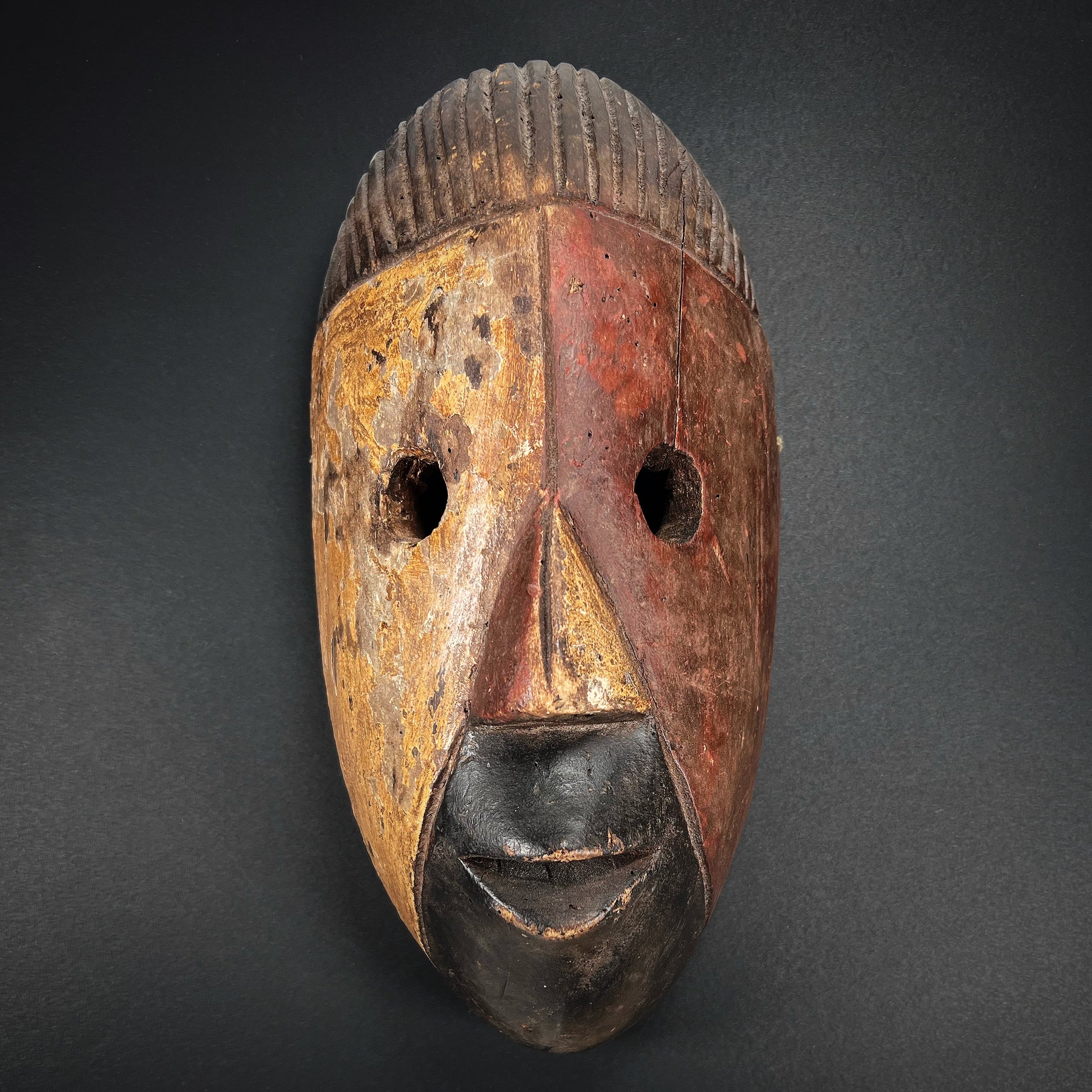
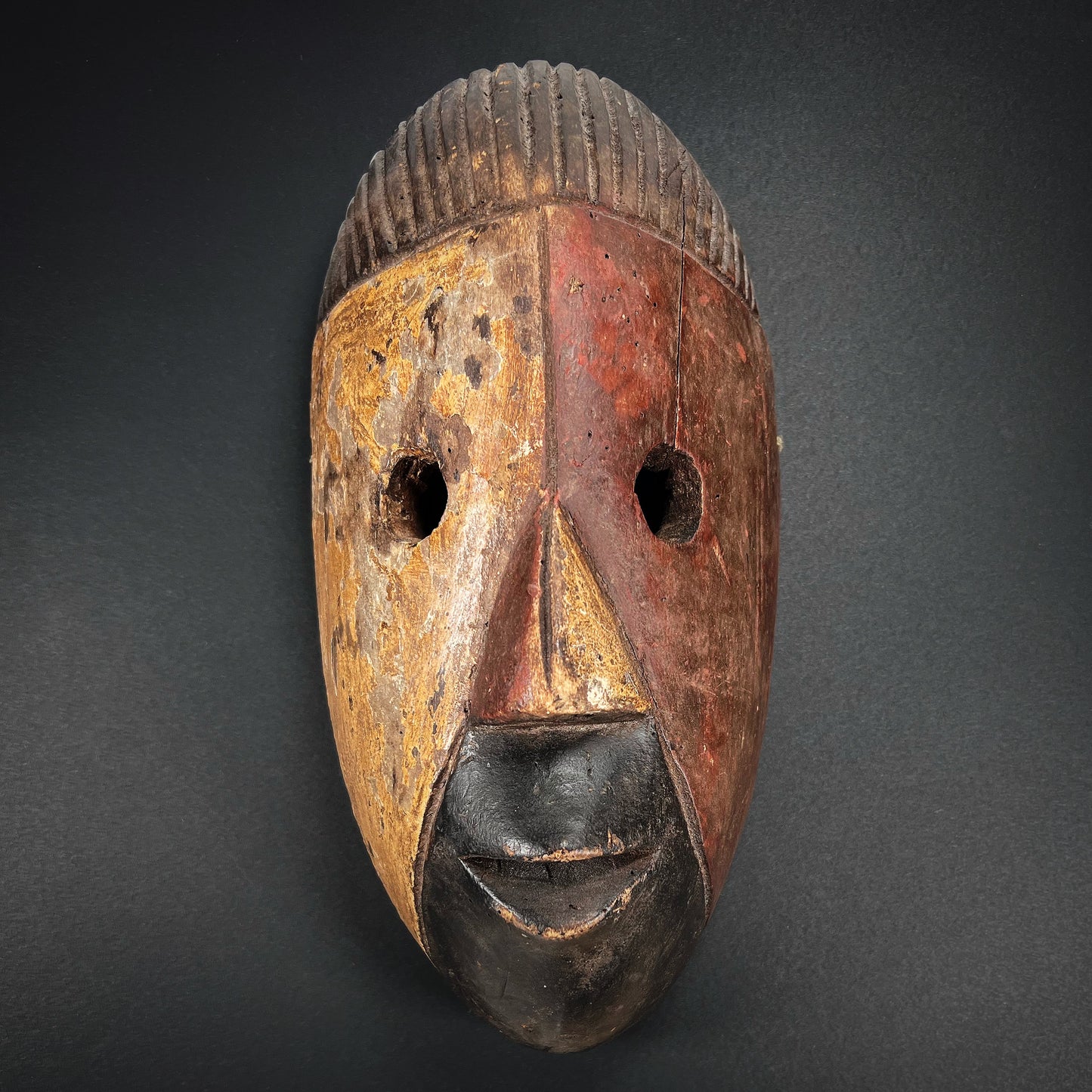
A refined, aged Sukuma ceremonial mask featuring serene, geometric facial forms: small round eyes, a sharply pointed nose, and a narrow open mouth. The surface is painted in red, white, and black pigments. While Sukuma masks often display dramatic expressions with inset teeth and exaggerated features, this example shows a more measured, contemplative character. Such masks were traditionally worn during dry-season dance performances and important initiation ceremonies, where they served both aesthetic and spiritual purposes.
The Sukuma and Nyamwezi are closely related ethnic groups living south of Lake Victoria in west-central Tanzania. They refer to themselves as Basukuma (sing. Musukuma) and Banyamwezi (sing. Munyamwezi). The Sukuma homeland, Usukuma, stretches west and south of Lake Victoria between the Mwanza Gulf and the Serengeti Plain.
Sukuma communities are organized into compact villages of a few to over a hundred homesteads. Each settlement is headed by a chief who is also a ritual specialist (nfumu), his authority balanced by various secret societies. Traditional belief recognizes a supreme creator god—known by several names in Kisukuma, including Lyuba, Liwelelo, Lubangwe, and Seba—many of which are connected to the sun. Religious practice centers on communication with ancestral spirits, spirit possession, and an understanding of the world as interconnected with both the natural and supernatural realms.
Ancestor veneration is especially important. Upon death, a person becomes an ancestor whose presence continues to influence the living. Families honor them with prayers and offerings of millet beer (lwanga) and cattle dung, the latter symbolizing wealth and recalling ancestors who once prospered with large herds.
This mask stands as a compelling example of Sukuma artistic expression—deeply rooted in communal ritual, ancestral reverence, and the dynamic performance traditions of Tanzania’s Lake Victoria region.
Excellent condition. Age-related wear and signs of old age due to extensive usage. Worm holes, minimal fractures and chip. Size approx. 31,5cm x 16,0cm x 12,5cm.
Provenance: Finnish private collection. Brought to Finland in the early 1940s.
References and further reading:
Boundless universe: The culture of expansion among the Sukuma-Nyamwezi of Tanzania, Per Brandström, Dept. of Cultural Anthropology, Uppsala University, 1990.
Sukuma, 101 Last Tribes (https://www.101lasttribes.com/tribes/sukuma.html)
Sukuma Culture and Tanzania, Bujora Cultural Centre - Kisesa, Mwanza, Tanzania, Sukuma Museum (http://sukumamuseum.org/sukuma-culture-and-tanzania/)
Hysteria in Sukuma Medical Practice R. E. S. Tanner Africa: Journal of the International African Institute, Vol. 25, No. 3 (Jul., 1955), pp.274-279.
-
Shipping
The shipment will be prepared in the course of 3-5 days and dispatched via Posti Group Oyj or purchased item(s) can be picked up from our shop during the store's opening hours (Tarkk’ampujankatu 4, 00140, Helsinki, Finland). Within the Finland, all items are shipped via Posti Group Oyj unless otherwise requested. We pack the items carefully and mainly in recycled materials because we want to save nature. You will receive the tracking number for your items by e-mail.
-
Returns
Returns and exchange will be accepted within fourteen days (14) of receipt at the purchaser’s cost to include freight and packaging. Items must be returned in the same condition as when they were shipped, and will not be accepted if damaged or altered in any way. Please inform us via email (info@gotanmaailma.fi) or by calling +358408408352 before sending. We do not accept returns more than 14 days after delivery.