


Thai San Kamphaeng Olive Green Glazed Stoneware Bowl
Thai San Kamphaeng Olive Green Glazed Stoneware Bowl
Couldn't load pickup availability
Lanna Kingdom Period, 13th to Early 16th Century, San Kamphaeng Kilns, Chiang Mai, Northern Thailand
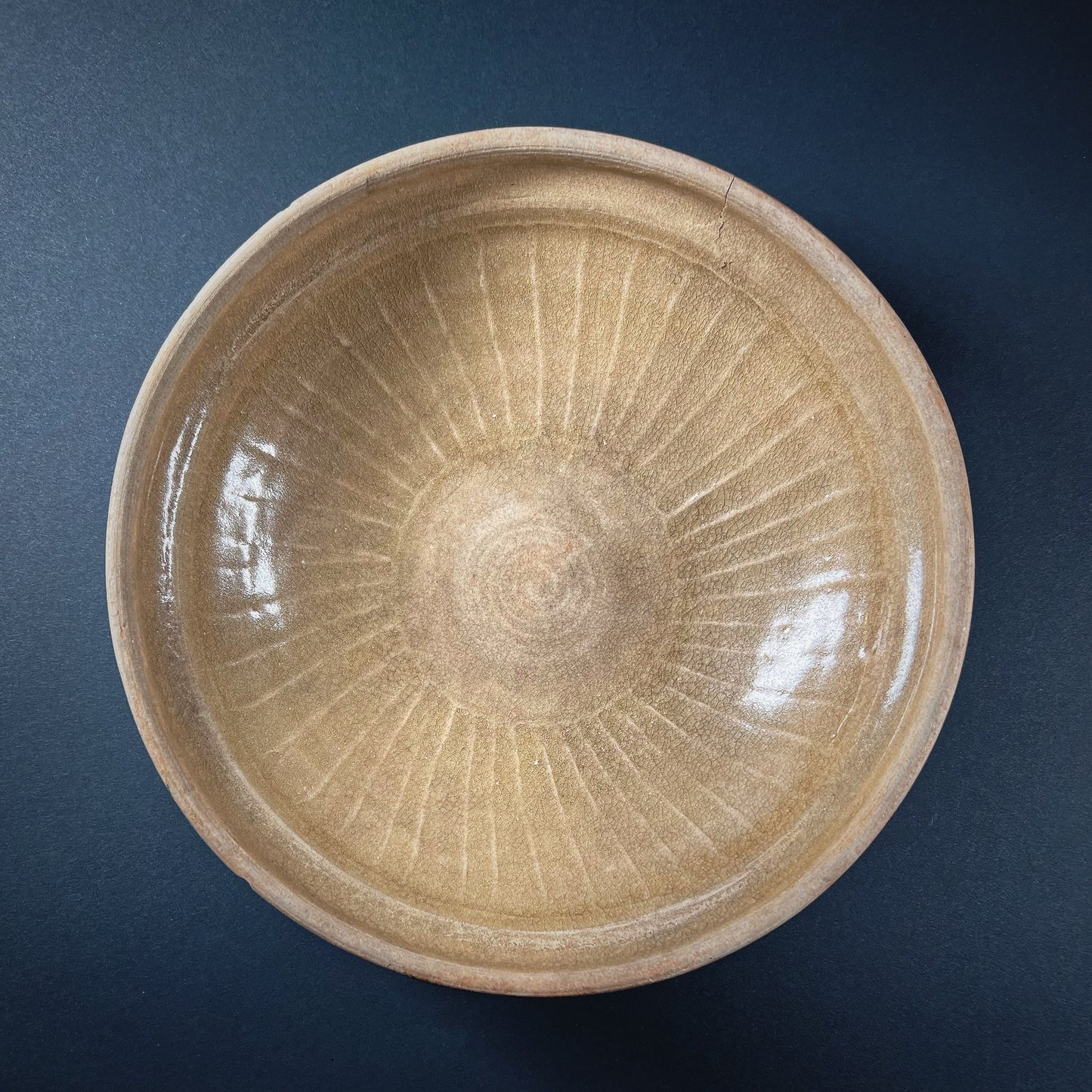
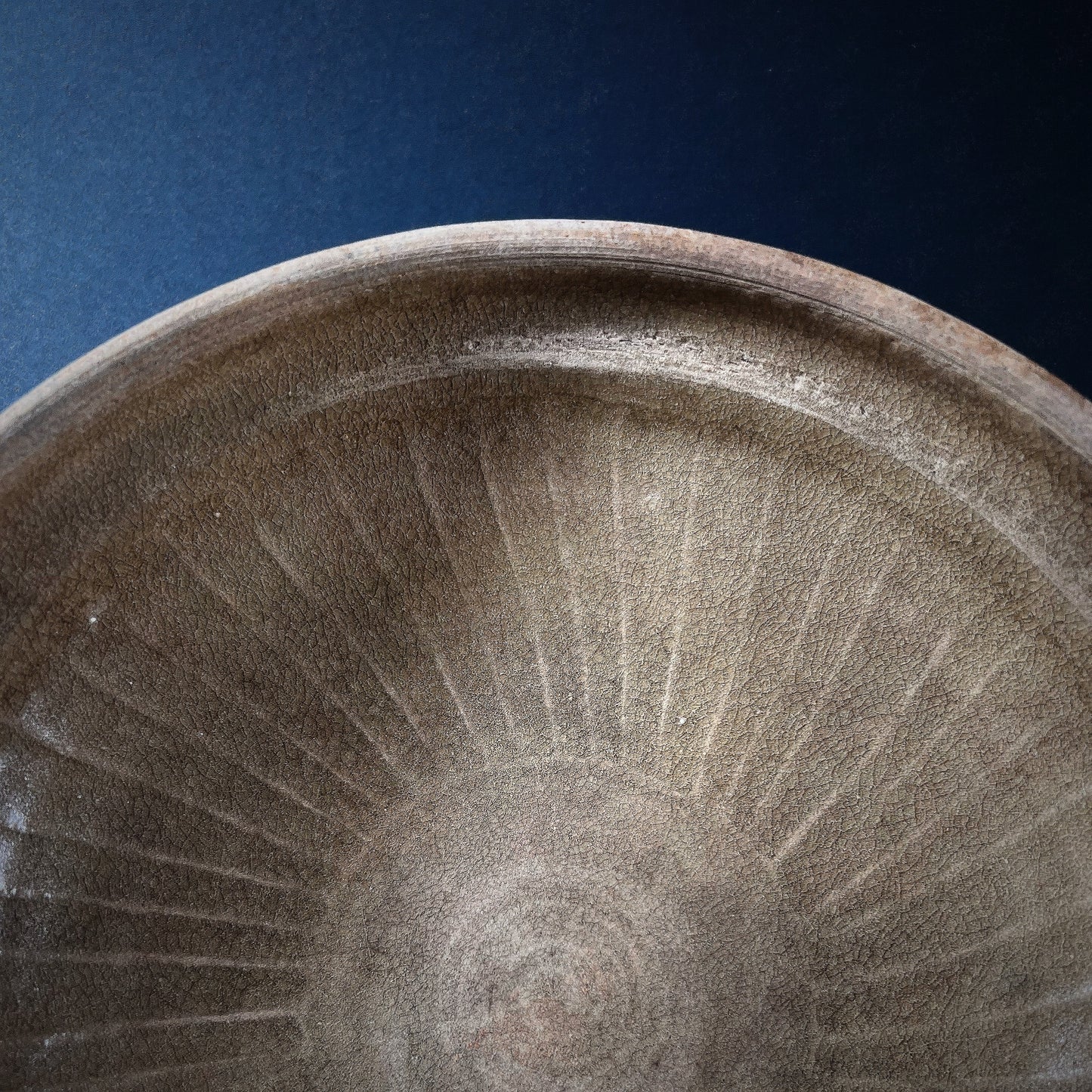
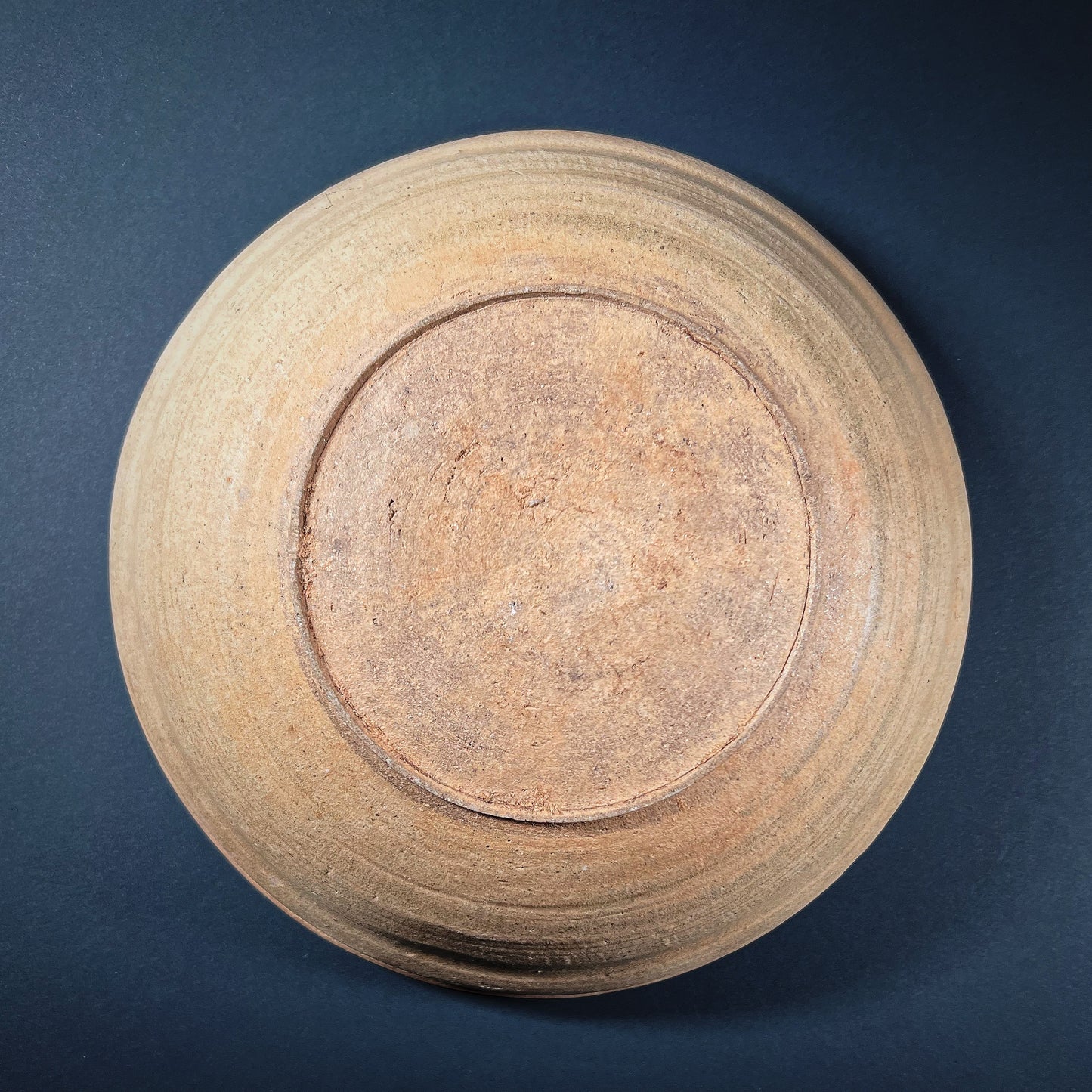
A magnificent hand-thrown, high-fired stoneware bowl from the San Kamphaeng kilns of Chiang Mai, displaying the characteristic light olive-green ash glaze for which this tradition is admired. The bowl, formed from a coarse clay body, presents a slightly raised everted rim—left unglazed due to the face-firing method employed in these kilns. The interior is marked by numerous radiating ridges created by the potter’s hand, while the exterior remains unglazed, decorated only with delicate incised encircling lines. Lightweight yet robust, it embodies the quiet refinement of northern Thai ceramics of the Lanna period.
Discovered as recently as 1952 by Thai archaeologist Kraisri Nimmanahaeminda, the San Kamphaeng kilns were strategically situated along the historic overland trade route linking Chiang Mai, Lamphun, and Lampang. The wares were fired in small cross-draft kilns—partially sunken, typically 2 to 4 meters long—and although 83 kilns have been identified, only a handful have been excavated in detail. San Kamphaeng ceramics are distinguished by their coarse clay, low footring, and the application of a white slip on the rim and interior before glazing or decoration.
Typical glaze hues range from buff, cream, and light brown to pale greens and greyish blacks. One of the most iconic motifs of this ware is the stamped twin-fish design, reminiscent of the Chinese yin-yang symbol, often placed at the center of bowls. Production and export flourished during the Ming export bans (1371–1509), when restrictions in China opened lucrative opportunities for Thai and Vietnamese ceramics in regional trade.
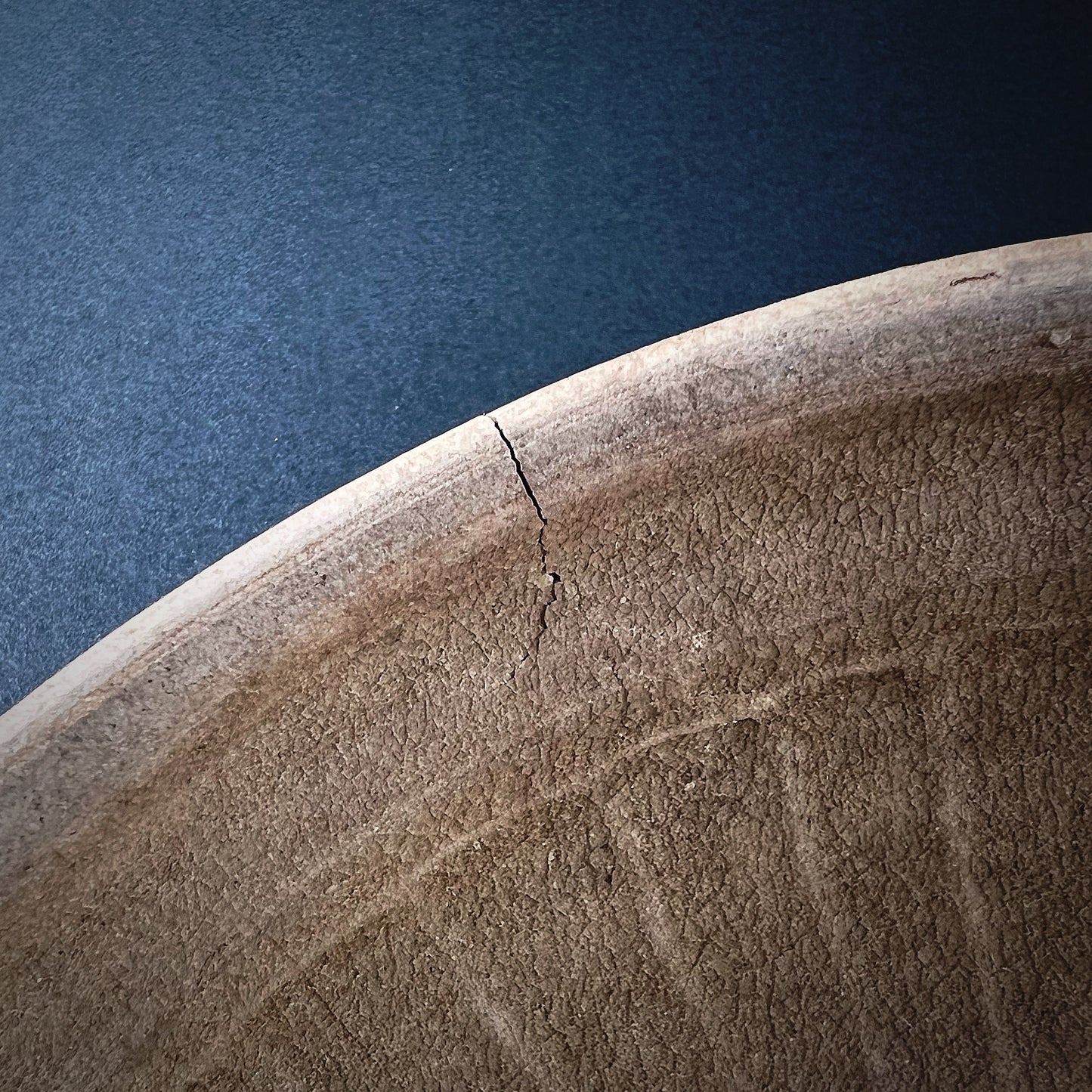
Good condition. Surface wear and abrasions commensurate with age and use. One visible broken line on the rim. Glazing defects and firing flaws. Lovely brown crackling and discolouring. Calcification. Size approx. 21,5cm x 21,5cm x 6,2cm.
Provenance: Swedish private collection
For a similar examples see:
Bowl with incised decoration, Art Gallery of NSW, Accession number: 220.2006 (https://www.artgallery.nsw.gov.au/collection/works/220.2006/)
Dish, Asian Civilisations Museum, Roots, National Heritage Board, Accession number: C-1558 (https://www.roots.gov.sg/Collection-Landing/listing/1086306)
References and further reading:
Sankampaeng glazed pottery, Kraisri Nimmanahaeminda, Chiang Mai, Sun Nangsu Chiang Mai, 2526, 1983.
Sankampaeng, Southeast Asian Ceramic Society (SEACS). (https://www.seaceramic.org.sg/)
Thai ceramics, National Museums Scotland.
The ceramics of southeast Asia: Thei dating and identification (2nd ed.), R.M. Brown, Singapore, Singapore: Oxford Univesity Press, 1988.
A Field Guide to Glazed Thai Ceramics, Dawn F. Rooney, Asian Perspectives, Vol 28. No 2, pp. 125-144, University of Hawai'i Press, 1988-89.
-
Shipping
The shipment will be prepared in the course of 3-5 days and dispatched via Posti Group Oyj or purchased item(s) can be picked up from our shop during the store's opening hours (Tarkk’ampujankatu 4, 00140, Helsinki, Finland). Within the Finland, all items are shipped via Posti Group Oyj unless otherwise requested. We pack the items carefully and mainly in recycled materials because we want to save nature. You will receive the tracking number for your items by e-mail.
-
Returns
Returns and exchange will be accepted within fourteen days (14) of receipt at the purchaser’s cost to include freight and packaging. Items must be returned in the same condition as when they were shipped, and will not be accepted if damaged or altered in any way. Please inform us via email (info@gotanmaailma.fi) or by calling +358408408352 before sending. We do not accept returns more than 14 days after delivery.