
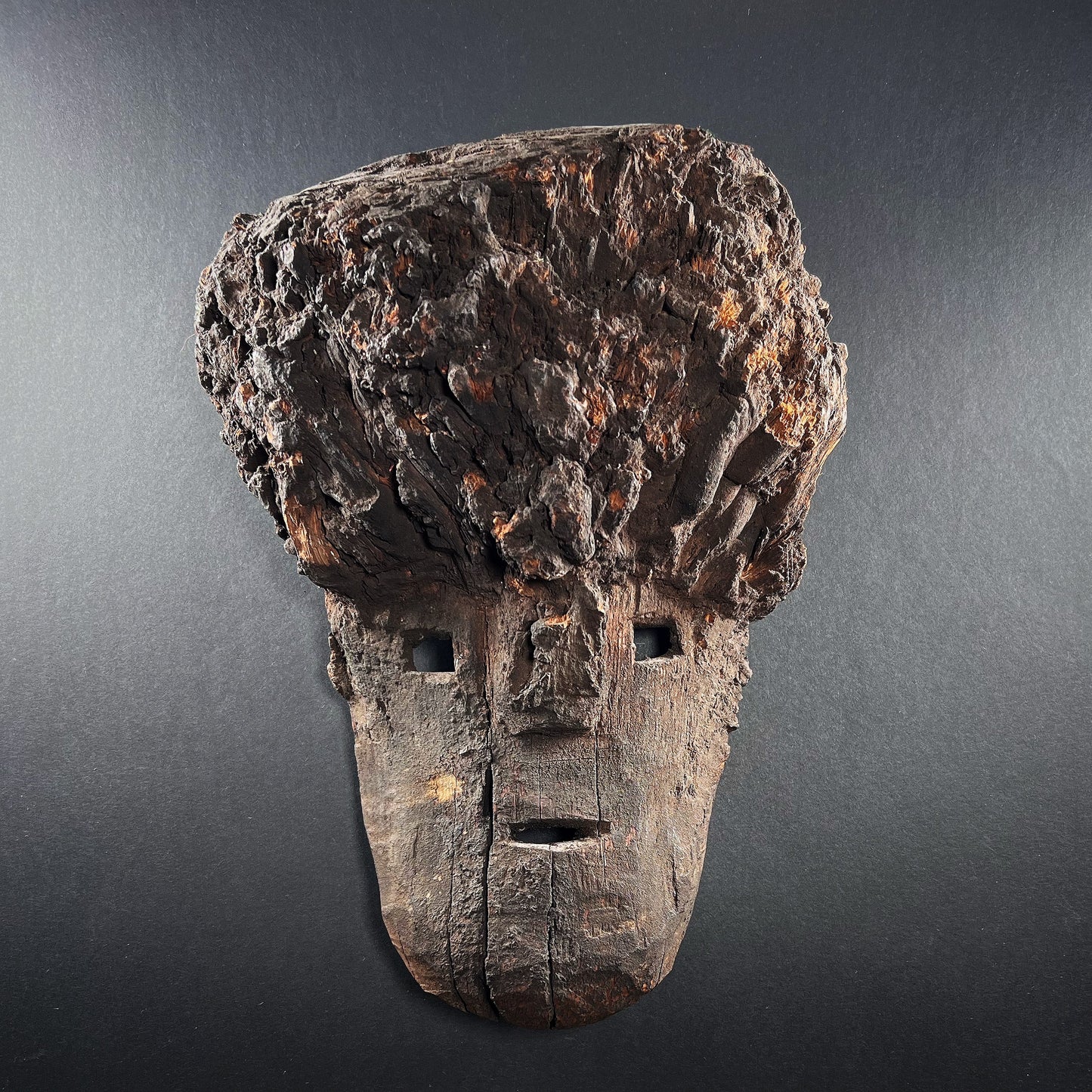
Timor Atoni Wooden Ceremonial Mask
Timor Atoni Wooden Ceremonial Mask
Couldn't load pickup availability
Atoni Peoples, c. 1890–1940 AD, West Timor, Indonesia
An absolutely fascinating hand-carved wooden ceremonial mask depicting a simple ovoid visage with narrow slits for the eyes and mouth. Carved from a single block of hard wood, the mask’s rugged, root-like texture gives it an organic and powerful presence. A deep, smoked black patina suggests extensive ritual use, likely within domestic interiors, where such masks served to protect households from malevolent spirits. Representing venerated ancestors, these masks embody the Atoni belief in ancestral beings as creators, protectors, and guarantors of fertility, prosperity, and cosmic balance.
This piece originates from the Atoni people—also known as Atoin Meto, Atoin Pah Meto, or Dawan—the predominant ethnic group of West Timor, the easternmost island of the Lesser Sunda chain. The name Atoni means “person” or “man,” derived from Atoin Pah Meho, “People of the Dry Land.” As noted by ethnographer Clarke Cunningham, Atoni culture is structured around spatial and gender dualities—male and female, inside and outside, light and dark, wet and dry—symbolizing the harmony of opposing forces that sustains life.
Although Christianity was introduced to the region after 1910, traditional animism—infused with traces of earlier Hindu influence—remains deeply rooted in Atoni spiritual life. Their cosmology venerates a Lord of Heaven, a Lord of Earth, and numerous ancestral and nature spirits that inhabit the hidden world. Ritual objects, including masks and inscribed skulls, were created to honour ancestors, secure crop success, and ensure the well-being of the community.
The island of Timor developed a distinctive tradition of mask-making, whose exact origins and meanings remain partly obscure. Ancestor masks, depicting both male and female forebears, were traditionally worn by men during dances, funerary rites, and victory celebrations. Others were enshrined on domestic altars or kept within huts as spiritual guardians. This example stands as a powerful testament to Atoni artistry, animist devotion, and the enduring presence of the ancestral spirit world within Timorese ritual culture.
Good condition. Wear commensurate with age and use, chip and old fractures. Size approx. 30,0cm x 23,0cm x 6,5cm.
Provenance: Finnish private collection
References and further reading:
Atoni Borrowing Of Children: An Aspect Of Mediation, Clarke E. Cunningham, American Ethnological Society Proceedings, Annual Spring Meeting, Seattle, 1965.
Categories Of Descent Groups In A Timorese Village, Clarke E. Cunningham, Oceania 37, 1966, pp 13-21.
-
Shipping
The shipment will be prepared in the course of 3-5 days and dispatched via Posti Group Oyj or purchased item(s) can be picked up from our shop during the store's opening hours (Tarkk’ampujankatu 4, 00140, Helsinki, Finland). Within the Finland, all items are shipped via Posti Group Oyj unless otherwise requested. We pack the items carefully and mainly in recycled materials because we want to save nature. You will receive the tracking number for your items by e-mail.
-
Returns
Returns and exchange will be accepted within fourteen days (14) of receipt at the purchaser’s cost to include freight and packaging. Items must be returned in the same condition as when they were shipped, and will not be accepted if damaged or altered in any way. Please inform us via email (info@gotanmaailma.fi) or by calling +358408408352 before sending. We do not accept returns more than 14 days after delivery.